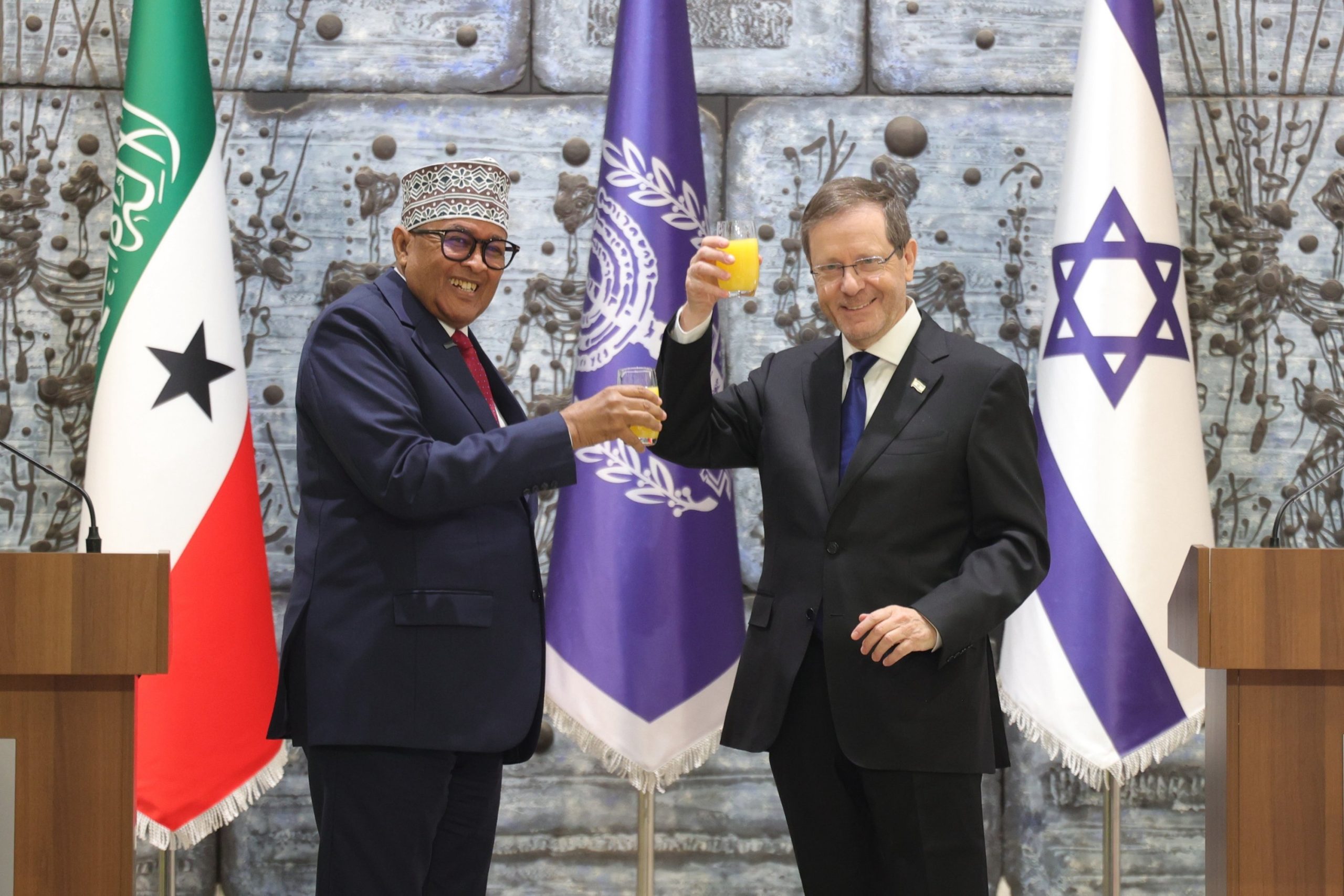
Somaliland Israel relations have entered a historic phase after President Abdirahman Mohamed Abdullahi travelled to Jerusalem for a landmark state visit with Israeli President Isaac Herzog. The meeting carried weight far beyond ceremonial diplomacy. It placed Somaliland’s long search for recognition at the centre of a wider debate about sovereignty, regional security and the changing balance of influence around the Horn of Africa.
For more than three decades, Somaliland has presented itself as a self-governing state with its own institutions, currency, security structures and democratic processes. Yet its international status has remained disputed because Somalia continues to regard the territory as part of its sovereign land. That tension has made every foreign engagement involving Hargeisa sensitive, especially when recognition is involved.
The latest Somaliland Israel engagement therefore stands out as a major diplomatic signal. It follows Israel’s decision to recognise Somaliland as an independent state, a move that reshaped a long-running issue that many governments had avoided. For Hargeisa, the recognition offered a rare opening after years of lobbying world leaders. For Israel, the relationship brings strategic value in a region close to the Gulf of Aden, the Red Sea and key maritime routes.
The meeting in Jerusalem also highlighted how diplomacy is changing in the Horn of Africa. Regional partnerships are no longer shaped only by geography or historic alliances. Instead, governments are increasingly weighing maritime security, trade access, counter-extremism cooperation and strategic positioning. Somaliland’s location gives it importance in each of those areas.
Somaliland Israel Relations Enter a New Diplomatic Phase
President Abdirahman Mohamed Abdullahi described the visit as highly significant because it marked the first state visit by a Somaliland president to another country. His message was clear: Somaliland wanted the world to see it, engage with it and treat it as a responsible political actor.
That statement reflects a central theme in Somaliland’s foreign policy. Since declaring autonomy from Somalia after civil conflict, Somaliland has worked to build functioning institutions while seeking external recognition. Its leaders have often argued that stability, elections and local governance should qualify it for deeper international engagement.
Israel’s recognition changed the diplomatic conversation. It created the first formal opening of its kind for Somaliland and raised the stakes for other governments watching the issue closely. However, it also triggered strong opposition from Somalia, which has repeatedly rejected foreign engagement with Somaliland when it appears to treat the territory as independent.
This difference will continue to shape regional reactions. Mogadishu is likely to view closer Somaliland Israel cooperation as a challenge to Somalia’s territorial claims. Meanwhile, Somaliland may use the visit to strengthen its argument that recognition can bring practical benefits in security, investment and international cooperation.
Why Somaliland’s Location Matters
Somaliland sits along the Gulf of Aden, near one of the world’s most important maritime corridors. Ships moving between the Indian Ocean, the Red Sea and the Suez Canal pass through nearby waters. As a result, security in this area affects global trade, energy transport and naval strategy.
That geography helps explain why the Somaliland Israel relationship has drawn attention. Israel has a strong interest in maritime freedom and regional stability. Somaliland, in turn, wants partners that can support development, security and diplomatic legitimacy.
President Herzog’s remarks focused on shared interests, including security, stability and the protection of maritime freedom. These themes are not accidental. They connect the partnership to wider concerns about the Red Sea, the Gulf of Aden and the Horn of Africa.
For Somaliland, cooperation with Israel may also create opportunities in areas such as water management, technology, agriculture, health and infrastructure. These sectors can strengthen public services while giving the relationship a practical foundation beyond recognition politics.
Somalia’s Objections Remain Central
Despite the diplomatic momentum, Somalia’s opposition remains one of the biggest challenges. Mogadishu has consistently rejected Somaliland’s claim to independence and views foreign recognition as a violation of Somalia’s sovereignty.
That position has support among several governments and regional bodies that worry recognition could encourage other separatist movements. In Africa, borders inherited at independence have often been treated with caution because changing them can create wider political disputes.
This is why the Somaliland Israel development carries continental significance. It is not only a bilateral story. It also touches on African Union principles, regional diplomacy and the question of how long-term de facto governance should be treated under international law.
Somalia’s earlier condemnation of Israeli diplomatic activity in Somaliland showed how sensitive the issue remains. Any future embassy activity, ambassadorial appointments or security agreements will likely attract close scrutiny from Mogadishu and its allies.
A Partnership Built on Security and Recognition
The new partnership appears to rest on two main pillars: Somaliland’s search for recognition and Israel’s interest in strategic cooperation. Both sides gain something important from the relationship.
For Somaliland, Israeli recognition offers diplomatic validation. It also helps Hargeisa argue that its stability and governance record deserve formal acknowledgement. The state visit strengthens that message by giving Somaliland’s president the visibility that earlier diplomatic campaigns struggled to secure.
For Israel, the relationship opens a new channel in the Horn of Africa. It also offers a potential partner near vital sea lanes at a time when Red Sea security remains a global concern. In addition, Israel may see Somaliland as part of a broader strategy of building ties with governments and political entities that share security interests.
However, the partnership will need careful handling. Recognition alone does not guarantee broad international acceptance. Somaliland still faces a difficult diplomatic road, and many countries may avoid taking sides because they value relations with Somalia or fear setting a precedent.
What the Visit Means for the Horn of Africa
The Jerusalem visit may encourage other governments to reassess how they engage with Somaliland. Some may stop short of recognition but increase technical cooperation. Others may wait to see whether Israel’s decision produces economic or security results.
The move may also affect competition among outside powers in the Horn of Africa. The region already attracts interest from Gulf states, Turkey, China, Western governments and regional actors. Somaliland’s ports, coastline and political stability make it relevant to that competition.
At the same time, the visit may deepen diplomatic pressure on Somalia. Mogadishu will likely push partners to reject recognition and maintain the position that Somaliland remains part of Somalia. Therefore, the issue could become more prominent in regional forums and bilateral talks.
For ordinary people in Somaliland, the key test will be whether diplomacy leads to real benefits. Recognition can raise national pride, but citizens will also look for jobs, trade, investment, education links and improved services. If the Somaliland Israel relationship delivers practical gains, it may strengthen public support for Hargeisa’s foreign policy direction.
Diplomatic Momentum With Regional Risks
The Somaliland Israel breakthrough is one of the most significant developments in Somaliland’s recognition campaign. It gives Hargeisa a stronger global platform and gives Israel a new partner in a strategically important region.
Yet the path ahead remains complex. Somalia’s objections will not fade quickly. Regional governments will weigh their own interests before responding. International organisations may also move cautiously because the issue touches on sovereignty, territorial integrity and regional stability.
Still, the Jerusalem meeting marks a turning point. It shows that Somaliland’s long diplomatic campaign has entered a new stage and that Israel is prepared to invest political capital in the relationship. As both sides explore cooperation in security, maritime freedom, technology and development, the partnership could influence the Horn of Africa’s diplomatic map for years to come.
For now, Somaliland Israel relations stand as a powerful example of how recognition, geography and security can combine to reshape regional politics. The visit may not settle the sovereignty debate, but it has ensured that Somaliland’s case will receive renewed international attention.