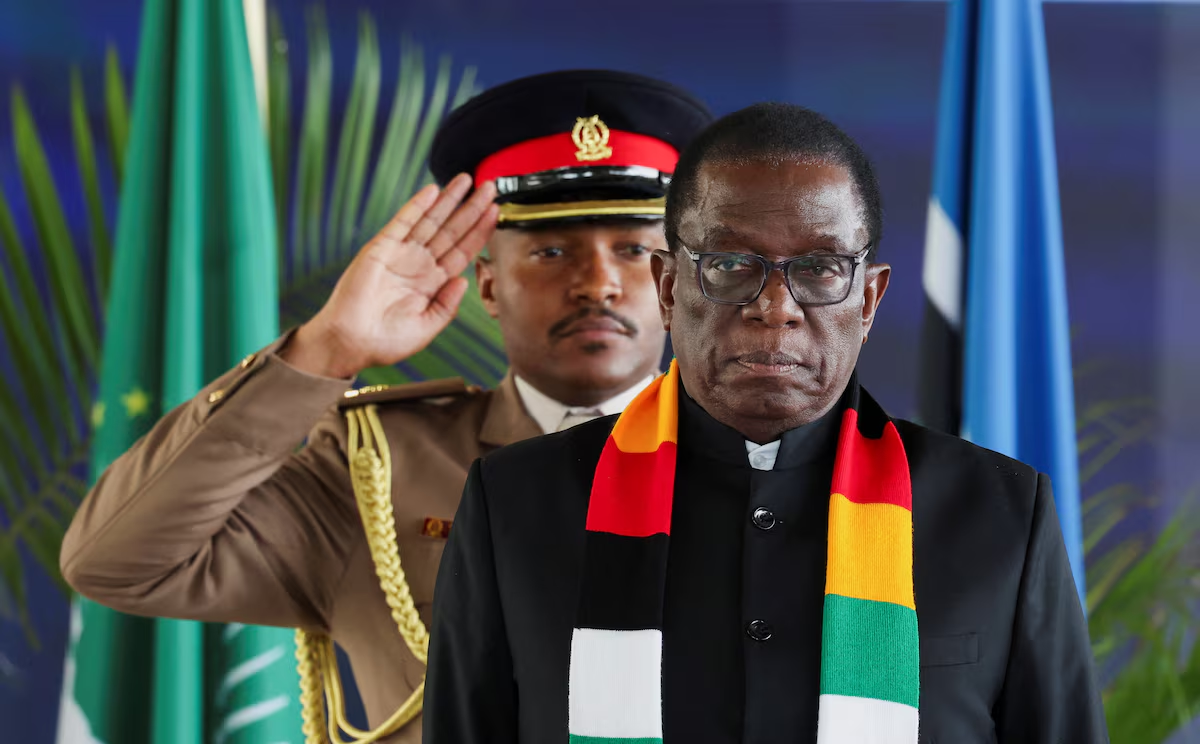
Zimbabwe’s debate over Term Limits has entered a new and tense phase after the ruling ZANU-PF party endorsed a political motion that could keep President Emmerson Mnangagwa in power until 2030. The decision has raised fresh concern among opposition leaders, civil society voices and democracy observers who argue that the move could weaken constitutional safeguards in a country already facing deep economic and political pressure.
The motion came during ZANU-PF’s annual conference, where delegates openly celebrated the proposal. Party supporters framed the push as a reward for what they described as development under Mnangagwa’s leadership. However, critics say the campaign risks placing party loyalty above the national constitution, which currently limits presidents to two terms.
For many Zimbabweans, the issue goes beyond political procedure. It touches daily life, public trust and the country’s long struggle to build accountable institutions after decades of one-party dominance. Mnangagwa came to power in 2017 after the military forced Robert Mugabe from office. At the time, he promised renewal, economic recovery and a different style of leadership. Years later, many citizens still face unemployment, rising prices and limited opportunities.
The latest push also reflects a wider African debate. Across the continent, several leaders have used legal changes, court rulings or party pressure to remain in office beyond earlier limits. Supporters often present such moves as stability measures. Opponents see them as tools that reduce competition and weaken democratic renewal.
In Zimbabwe, the next steps will test both the ruling party’s power and the resilience of the constitution. ZANU-PF holds major influence in Parliament and state institutions, which gives the proposal a serious chance of moving forward.
Term Limits Debate Deepens in Zimbabwe
ZANU-PF’s decision has placed Zimbabwe’s constitution at the centre of a high-stakes political contest. Under current rules, Mnangagwa would be expected to leave office in 2028. The party’s new position, however, supports extending his leadership to 2030.
That would require a political and legal process capable of changing or bypassing the current presidential limit. Opposition figures have already promised resistance, saying the constitution should not be reshaped to serve one leader or one party.
Former finance minister Tendai Biti said opponents would defend the constitution from capture and manipulation. His warning reflects a broader fear that Zimbabwe’s institutions may struggle to resist pressure from a ruling party that has controlled national politics since independence in 1980.
ZANU-PF officials insist the demand came from the party’s grassroots. Party spokesperson Chris Mutsvangwa said the motion passed without opposition among delegates. He also described the campaign as a democratic wish from within the party.
However, party approval is not the same as national consent. Zimbabwe’s critics argue that the real test should come from citizens, independent institutions and a transparent constitutional process.
Mnangagwa’s 2030 Push Raises Democratic Concerns
Mnangagwa has previously said he would respect the two-term limit. His silence on the issue during the latest party conference has therefore drawn attention. Instead of directly rejecting or accepting the proposal, he allowed the party resolution to stand as delegates celebrated the slogan that 2030 belongs to Emmerson.
The conference also approved a separate move to make Mnangagwa’s birthday, September 15, an annual public holiday. To supporters, this may appear as recognition of his role in the country. To critics, it signals a growing personality-driven politics that places the leader at the centre of national life.
Zimbabwe has a painful history with prolonged rule. Mugabe governed for 37 years before his removal in 2017. Mnangagwa, once a close ally of Mugabe, came in promising a new national direction. Yet opposition groups and rights advocates say his administration has continued to restrict protests, limit dissent and use state power against political rivals.
That background makes the 2030 campaign especially sensitive. Many citizens do not see it as a routine party matter. They see it as a possible return to the same political habits that kept Zimbabwe locked in leadership uncertainty for decades.
H2: Economic Struggles Shape Public Reaction
The push to extend Mnangagwa’s rule comes at a time when ordinary Zimbabweans are dealing with serious economic challenges. High unemployment, poverty and inflation remain major concerns. For younger people, the lack of stable jobs has created frustration and uncertainty.
Some citizens say the leadership debate feels disconnected from their daily struggles. Young people who cannot afford university fees or find work question why the ruling party is focused on extending power instead of improving living conditions.
Graduates who expected professional careers have often turned to informal work. Street traders, small repair workers and vendors continue to face unstable income and pressure from local authorities. For them, political promises mean little when food, rent and education remain difficult to afford.
This public frustration weakens the ruling party’s development argument. ZANU-PF says Mnangagwa deserves more time because of progress under his administration. Yet many households say they have not felt that progress in their own lives.
Africa’s Wider Struggle Over Term Limits
Zimbabwe’s case fits into a wider continental pattern. Researchers Nic Cheeseman and Marie-Eve Desrosiers have studied repeated attempts by African leaders to evade or alter term limits. Their work points to dozens of attempts across many countries since 1990, with most efforts succeeding.
Leaders in Rwanda, Uganda and Ivory Coast have all remained in power despite earlier two-term expectations or constitutional barriers. These cases have created concern among democracy advocates who say repeated extensions reduce political competition and make peaceful leadership change more difficult.
Term limits are not only about removing a leader after a set period. They help protect institutions from becoming dependent on one person. They also create space for new ideas, younger leaders and public accountability.
When ruling parties weaken those limits, elections may still happen. However, the playing field can become less fair. State resources, courts, security agencies and public media may tilt toward the incumbent. Over time, voters may feel that elections cannot truly change leadership.
Opposition Faces a Difficult Road
Zimbabwe’s opposition has promised to challenge the extension campaign, but it faces major obstacles. The ruling party has a strong parliamentary position and deep influence over state institutions. Political analysts also say opposition parties have been weakened by internal divisions, legal pressure and the removal of some lawmakers from Parliament.
Civil society groups may also find it difficult to mobilise large public resistance. Zimbabwean authorities have often taken a hard line against demonstrations. That creates fear among citizens who may oppose the move but worry about the consequences of speaking out.
Political analyst Vivid Gwede has argued that the campaign may also protect the business and political interests of Mnangagwa’s allies. In this view, the 2030 push is not only about leadership continuity. It is also about access to influence, contracts and state-linked opportunities.
That makes the battle more complex. It is not simply a debate over dates in the constitution. It is a struggle over power, resources and the future shape of Zimbabwe’s political system.
What Happens Next in Zimbabwe
ZANU-PF has said the resolution should be implemented before its next annual conference. That puts pressure on Justice Minister Ziyambi Ziyambi and other state officials to find a path toward making the party’s demand real.
Any formal extension would likely require legal steps, parliamentary action or a constitutional process. The details will matter. So will public reaction, regional pressure and the ability of opposition voices to organise.
For now, Mnangagwa has not publicly made a final personal commitment to stay until 2030. Still, the ruling party’s message is clear. It wants him to remain in power beyond the current constitutional limit.
The question is whether Zimbabwe’s institutions can withstand that pressure. The answer will shape not only Mnangagwa’s future but also the country’s democratic credibility, investor confidence and public trust.
For citizens already facing economic hardship, the debate carries a simple but powerful question: will national leadership focus on extending power, or on improving life for the people it serves?