
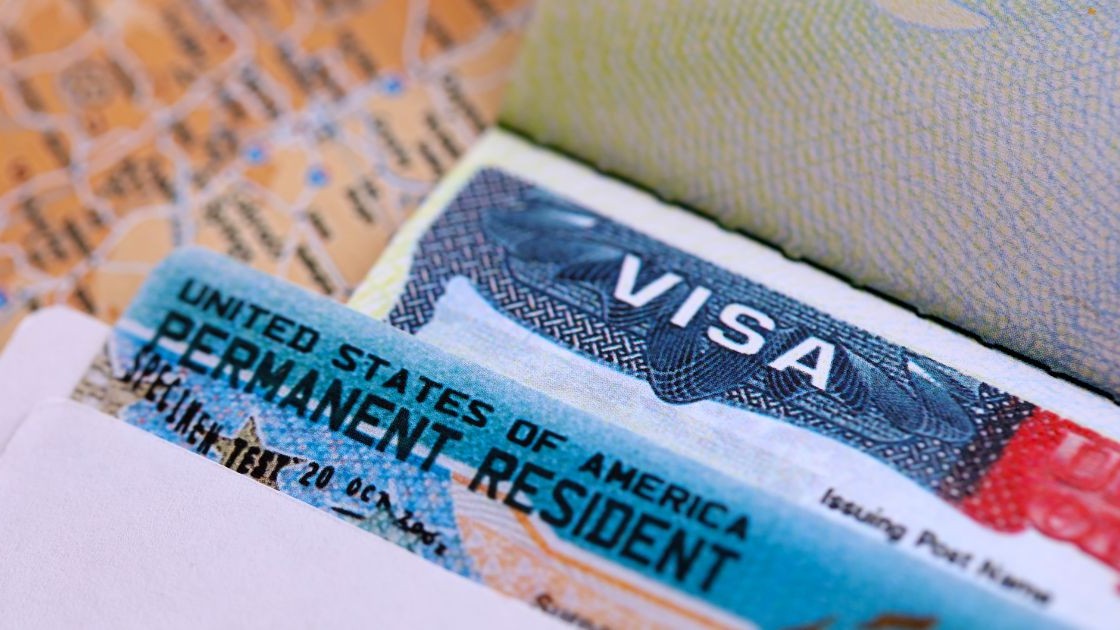
The Trump administration has reportedly suspended Microsoft from the process used by employers to sponsor foreign workers for permanent residency in the United States. The decision, announced on Thursday, October 8, 2026, has raised concerns about the future of employees who rely on employer-sponsored green cards to establish long-term residency in the country.
The development comes as immigration policy remains a major issue for American technology companies, many of which recruit skilled professionals from overseas. Businesses such as Microsoft rely on international talent across areas including software engineering, cloud computing, cybersecurity and artificial intelligence. For foreign employees, employer-sponsored permanent residency can provide a longer-term alternative to temporary work authorization.
However, the reported suspension does not mean that all affected workers have automatically lost their existing right to work in the United States. The action concerns the employment-based permanent residency process rather than an automatic cancellation of existing H-1B visas. The distinction is important because temporary work authorization and permanent residency are separate immigration pathways with different requirements.
Microsoft is not the only company reportedly affected. Other major technology and consulting businesses, including Adobe, Capgemini, Cognizant, HCL, Infosys, Tata and Wipro, were also named in the announcement.
The suspension also coincided with a scheduled ceremony to award Microsoft CEO Satya Nadella the National Medal of Technology and Innovation. The timing drew attention to the contrast between the administration’s recognition of technology leadership and its actions concerning the immigration pathways used by technology employers.
Questions remain about the duration of the suspension, its legal basis and the status of applications already in progress.
What the Microsoft Green Card Suspension Means
The reported action focuses on the employment-based green card process, specifically the labor certification stage that many employers must complete before sponsoring foreign employees for permanent residency.
Labor certification generally requires an employer to demonstrate that there are not sufficient qualified and available US workers for the position and that hiring the foreign worker will not adversely affect the wages and working conditions of similarly employed American workers.
US Vice President JD Vance said the administration would stop accepting new or pending permanent labor certification applications involving the affected companies, according to the announcement described in the report.
This stage is important because it can be a prerequisite for an employer-sponsored immigrant petition. However, labor certification is not itself a green card, and completing it does not guarantee permanent residency. Other immigration requirements and approval stages may still apply.
The reported suspension could therefore affect employees who are waiting to begin the process as well as those whose applications have not yet cleared the relevant stage.
The precise consequences for individual workers will depend on their immigration status, application stage and any subsequent government guidance or legal developments.
JD Vance Questions Companies’ Hiring Practices
Vance defended the administration’s action by questioning how large employers demonstrate that they cannot find qualified American workers before sponsoring foreign employees.
Under the labor certification process, employers generally must conduct recruitment activities intended to test the availability of qualified US workers. The required steps depend on the position and applicable Department of Labor rules.
Vance argued that some companies advertise vacancies in places where they are unlikely to attract many applicants. He suggested that employers could then use the lack of responses to support their applications to hire foreign workers.
He also cited figures concerning Microsoft’s workforce reductions and its use of employment-based immigration programs.
According to Vance’s statements, Microsoft laid off approximately 6,000 American workers during the previous year, obtained about 6,300 H-1B visas and pursued nearly 3,000 green cards. He used these figures to argue that the company was relying heavily on foreign workers while reducing its American workforce.
However, the numbers require careful interpretation.
H-1B visa figures, green card applications and layoffs measure different activities. They do not necessarily represent distinct groups of people, nor do they establish that foreign employees directly replaced workers who lost their jobs.
Examining the Numbers Behind the Allegations
The figures cited by Vance raise questions about how the administration calculated its comparison between layoffs and foreign-worker sponsorship.
Dividing approximately 6,300 H-1B visas by 6,000 layoffs produces a ratio of about 1.05, rather than 1.5.
The higher figure appears to result from adding the roughly 3,000 green cards to the H-1B total before comparing the combined number with layoffs. That calculation produces approximately 9,300 against 6,000, or around 1.55.
However, adding the figures together may not provide a reliable count of individual workers.
H-1B applications can involve people already employed by a company, including workers seeking extensions or changes to their existing status. Similarly, employment-based green card sponsorship often concerns people who are already working in the United States.
Consequently, some workers could appear in both categories. The figures also do not establish that each person receiving immigration sponsorship was hired to replace someone who had been laid off.
A complete assessment would require comparable data covering the relevant periods, application categories, unique workers and the circumstances surrounding Microsoft’s workforce reductions.
Microsoft’s Response to the Suspension
Microsoft disputed the suggestion that its immigration practices primarily involve bringing new foreign workers into the country to replace American employees.
The company said the vast majority of its US workforce consists of American workers and indicated that it was prepared to provide the administration with additional information.
Microsoft also cited its own figures for H-1B applications filed during the previous fiscal year.
According to the company, approximately 80% of the roughly 6,000 applications involved extensions or changes of status for people already working at Microsoft. The remaining 20%, or about 1,200 filings, concerned individuals who were already legally present in the United States and chose to join the company.
Microsoft said this latter group represented approximately 1% of its US workforce. It also maintained that H-1B employees receive pay comparable to that of other employees performing similar work.
These figures reflect Microsoft’s account of its hiring practices. The administration’s allegations and the company’s response address different aspects of the dispute, and the figures alone do not establish whether every employer has complied with all applicable immigration and labor requirements.
Universities Also Face Scrutiny Over J-1 Visas
The immigration announcement extended beyond technology companies.
Vance also named nine universities that he said would face investigations over alleged misuse of the J-1 exchange visitor program. The program supports eligible educational and cultural exchanges, including certain work and study arrangements.
The institutions named were Harvard University, Yale University, Stanford University, Brown University, the University of Pittsburgh, the University of California, Davis, the California Institute of Technology, Arizona State University and the Massachusetts Institute of Technology.
Vance alleged that these universities used the program at higher rates than comparable institutions.
The allegations concern a different immigration pathway from the employment-based green card process affecting Microsoft and the other named companies. Any findings would depend on the evidence gathered during the investigations and the applicable program requirements.
The broader scrutiny reflects the administration’s attention to how employers and educational institutions use immigration programs to bring international talent into the United States.
Proposed Changes Could Affect International Students
The dispute also follows a separate proposal involving international students who work under Optional Practical Training, commonly known as OPT.
The program allows eligible international students to gain practical work experience related to their fields of study during or after their academic programs, subject to applicable rules.
The report states that the Department of Homeland Security proposed a $70,000 fee connected to international students participating in OPT, with schools expected to pay the fee for each participating student under the proposal.
Because this measure is described as a proposal, it should not be confused with a confirmed fee already imposed on every eligible student. Its status, scope and implementation would depend on the formal rulemaking process and any subsequent changes.
Any significant increase in the cost of employing international graduates could affect decisions by universities, employers and students. The actual impact would depend on the final requirements and how institutions respond.
Why H-1B Visas Matter to Technology Companies
The H-1B program allows eligible US employers to hire foreign professionals for qualifying specialty occupations. Technology companies are among its major users because many roles require specialized knowledge and technical skills.
Workers from India account for a substantial share of H-1B approvals, reflecting the country’s large pool of technology professionals and the established recruitment networks connecting Indian talent with American employers.
Supporters of the program argue that it helps businesses recruit skills that may be difficult to find locally and enables companies to compete in specialized industries.
Critics, meanwhile, argue that the system can create incentives to recruit foreign workers at the expense of American employees or leave sponsored workers vulnerable because their immigration status is connected to employment.
The Microsoft dispute brings these competing concerns into focus. Assessing the program’s effects requires examining actual recruitment practices, wages, job availability and compliance with labor protections rather than relying on visa totals alone.
What Happens to Workers Awaiting Green Cards?
For affected employees, the most immediate concern is uncertainty about the next stage of their immigration applications.
A suspension affecting labor certification could delay or prevent progress through an employer-sponsored permanent residency pathway while the restrictions remain in effect. However, the impact will vary according to each worker’s circumstances and the precise scope of the government action.
The announcement also leaves several questions unanswered, including how long the restrictions will last, what legal authority supports them and whether affected employers or workers will challenge the decision.
Any legal challenge or subsequent government clarification could influence how the suspension is implemented.
For now, workers should distinguish between the reported restrictions on permanent residency sponsorship and the separate rules governing their existing temporary work authorization. Employees facing uncertainty may need to consult qualified US immigration counsel about their individual circumstances.
The outcome could have implications beyond Microsoft. Technology firms, consulting companies, universities and international professionals will be watching for further details about the suspension and any broader changes to US employment-based immigration policy.