
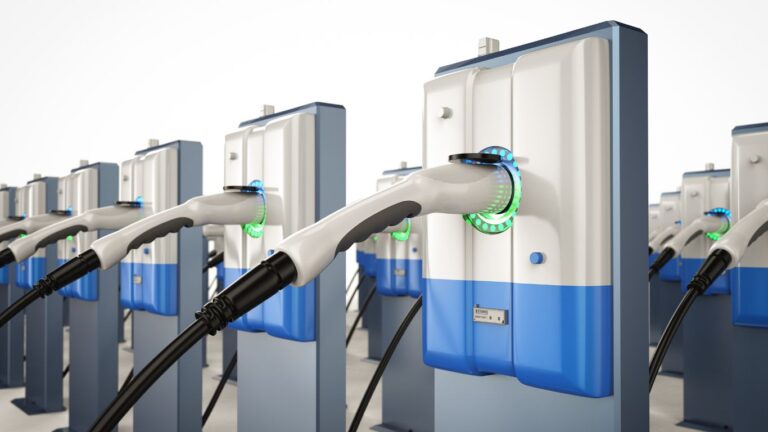
Kenya’s push toward electric mobility just got a significant boost, and it’s coming from an unexpected place: a regulatory tweak buried in a gazette notice. The Energy and Petroleum Regulatory Authority has quietly removed one of the biggest operational headaches facing EV charging businesses in the country, a monthly consumption cap that had been forcing station operators to artificially limit how many vehicles they could serve. For an industry still finding its footing, this kind of policy shift can matter just as much as any new charging station or battery innovation.
To understand why this change matters, it helps to look at what came before. Under the previous framework, businesses running EV charging stations were treated similarly to ordinary small commercial power users. They could access favorable rates only up to a certain point, 15,000 kilowatt-hours each month, after which they were hit with steep penalty charges for every additional unit consumed. In effect, growth was being penalized. The more successful a charging station became, the more likely it was to cross that threshold and start losing money on the very demand it was trying to serve.
That contradiction is exactly what the latest amendment addresses. By eliminating the monthly ceiling entirely for the e-mobility tariff category, regulators have effectively told charging network operators that they no longer need to hold back. This piece breaks down what the new rules actually change, how the industry is reacting, and what else got adjusted in the same regulatory update.
Why the Old EV Charging Rules Held Businesses Back
Before this amendment, the e-mobility tariff offered genuinely attractive pricing: KES 16 per kilowatt-hour during standard hours, cut in half to KES 8 during off-peak hours between 10 PM and 6 AM. On paper, that discount structure was designed to encourage electric vehicle adoption by keeping charging costs predictable and low. In practice, however, the 15,000 kWh monthly cap created a strange incentive. Once an EV charging station approached that limit, every additional unit of electricity came with a penalty of up to KES 5 extra, a jump steep enough to erase much of the benefit the discounted tariff was supposed to provide.
Several operators responded by capping the number of vehicles they served at individual stations, essentially throttling their own growth to avoid triggering the higher rate. BasiGo, the electric bus manufacturer, reported that most of its 17 charging stations were already bumping up against that ceiling. Spiro, a battery-swapping company operating roughly 500 stations across the country, said more than 20 of its locations were in a similar position. For companies trying to scale infrastructure to meet rising demand, that kind of self-imposed limit undermined the entire point of expansion.
What Changes Under the New EV Charging Tariff Rules
The core pricing structure for EV charging remains untouched. Operators still pay KES 16 per kilowatt-hour during regular hours and KES 8 during the overnight discount window. What’s different now is that there’s no longer a consumption limit tied to that pricing. Charging stations, battery swap points, and fleet depots can draw as much electricity as their operations require without being reclassified into a costlier pricing bracket.
Moses Nderitu, vice president of the Electric Mobility Association of Kenya and managing director of BasiGo Kenya, described this as a meaningful turning point for the sector. According to Nderitu, the removal of the cap gives operators the flexibility to broaden their services beyond their own vehicle fleets, opening the door to charging motorbikes, vans, and privately owned electric vehicles at the same stations. That kind of cross-compatibility could help build the kind of shared charging infrastructure that a growing EV market actually needs, rather than isolated networks built around individual company fleets.
Additional Adjustments Bundled Into the Regulatory Update
The removal of the EV charging cap wasn’t the only change included in the notice. EPRA also revised how consumption thresholds are calculated for small commercial, e-mobility, and industrial customers falling under categories CI1 through CI7. Instead of relying on a fixed consumption number, thresholds will now be based on the average of a business’s first three months of billing, a shift that should better reflect how individual operations actually use power rather than applying a one-size-fits-all figure.
Businesses in those same categories that run at full capacity around the clock now have a path to an additional 5% discount on off-peak electricity rates, contingent on Kenya Power verifying their actual output. This adds another layer of incentive for high-demand operators, including many EV charging businesses, to shift more of their consumption toward overnight hours when the grid has more spare capacity.
The notice also introduced formal definitions for net metering and power dumping, concepts that previously lacked clear regulatory language. Under the new definitions, customers generating their own renewable electricity and exporting surplus power back to the grid will receive credit for half of what they export, while the remainder gets billed at standard rates. Power sent to the grid without prior written approval, meanwhile, is now classified as dumping and billed at the full base tariff, regardless of whether the customer already holds a net metering agreement.
These adjustments apply retroactively, taking effect from July 1, 2025, and were signed off by Acting Director-General Dr. Joseph Oketch. For a government working to reduce its fuel import bill and cut reliance on imported oil, easing restrictions on EV charging infrastructure is a fairly straightforward way to keep that transition moving without requiring new spending or subsidies.