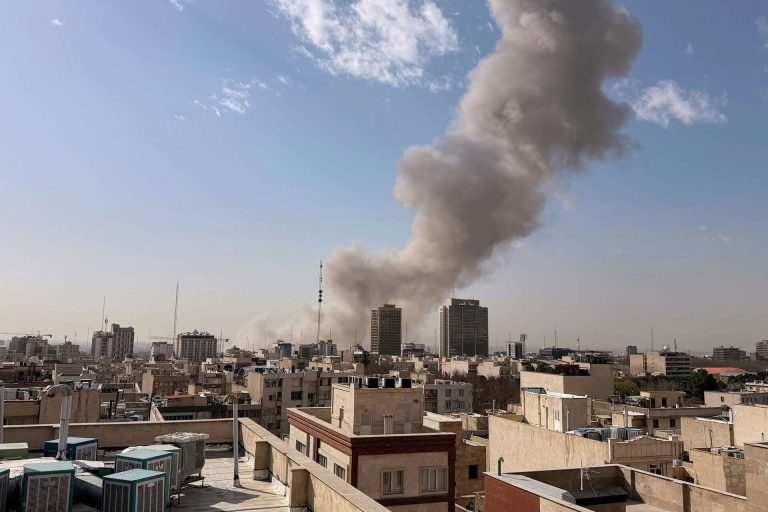
The Israel Iran Attack intensified on Saturday after Israel launched a daylight strike targeting Iran’s capital, Tehran. A visible cloud of smoke rose from the downtown area, with reports indicating that the explosion occurred near the offices of Supreme Leader Ayatollah Ali Khamenei.
It remains unclear whether the 86-year-old leader was present at the time of the strike. Ayatollah Khamenei has not appeared publicly in recent days, as tensions between Iran, Israel, and the United States continue to mount. The Israel Iran Attack comes amid growing diplomatic and military pressure over Iran’s nuclear program.
The situation escalated as both sides signaled heightened alertness. Israeli authorities confirmed military action, while Iranian state media reported explosions without immediately identifying the cause.
Details of the Israel Iran Attack in Tehran
Witnesses in Tehran reported hearing a powerful blast in the city center. Shortly afterward, Iranian state television acknowledged the explosion but did not provide details on casualties or damage.
The Israel Iran Attack reportedly struck near key government offices. However, officials have not released information about injuries or structural impact.
Simultaneously, air raid sirens sounded across Israel. The Israeli military stated it issued a proactive alert to prepare the public for the possibility of missile launches targeting Israeli territory.
Israeli Government Response
Israeli Defense Minister Israel Katz described the Israel Iran Attack as an operation intended “to remove threats.” While he did not elaborate further, he declared a “special and permanent state of emergency” across Israel.
The declaration indicates that Israeli authorities anticipate potential retaliation. Military readiness levels have reportedly increased nationwide.
The Israeli government’s move comes as the United States has deployed fighter jets and naval forces in the region. The buildup is widely viewed as part of broader efforts to pressure Iran into negotiations over its nuclear activities.
Iran Closes Airspace Following the Attack
In response to the Israel Iran Attack, Iranian authorities shut down national airspace. The closure followed explosions heard across Tehran and was accompanied by official warnings to pilots.
Airspace shutdowns are typically implemented to ensure civilian aviation safety during military activity. However, the move also signals heightened security concerns within the country.
As of now, Iranian officials have not released casualty figures or confirmed the specific targets of the strike.
U.S. Position and Regional Implications
The United States military declined to comment immediately on the Israel Iran Attack. However, the presence of U.S. forces in the region underscores the broader geopolitical implications.
Regional analysts suggest that the attack increases the risk of escalation between Israel and Iran. With tensions already high due to nuclear negotiations and military deployments, further developments remain uncertain.
Governments across the region are closely monitoring the situation. Airspace closures, emergency declarations, and public alerts reflect the seriousness of the unfolding events.
As the Israel Iran Attack continues to shape regional security dynamics, authorities in both countries have yet to provide detailed assessments of the damage or potential next steps. Further updates are expected as official statements emerge.
Adapted from Agencies