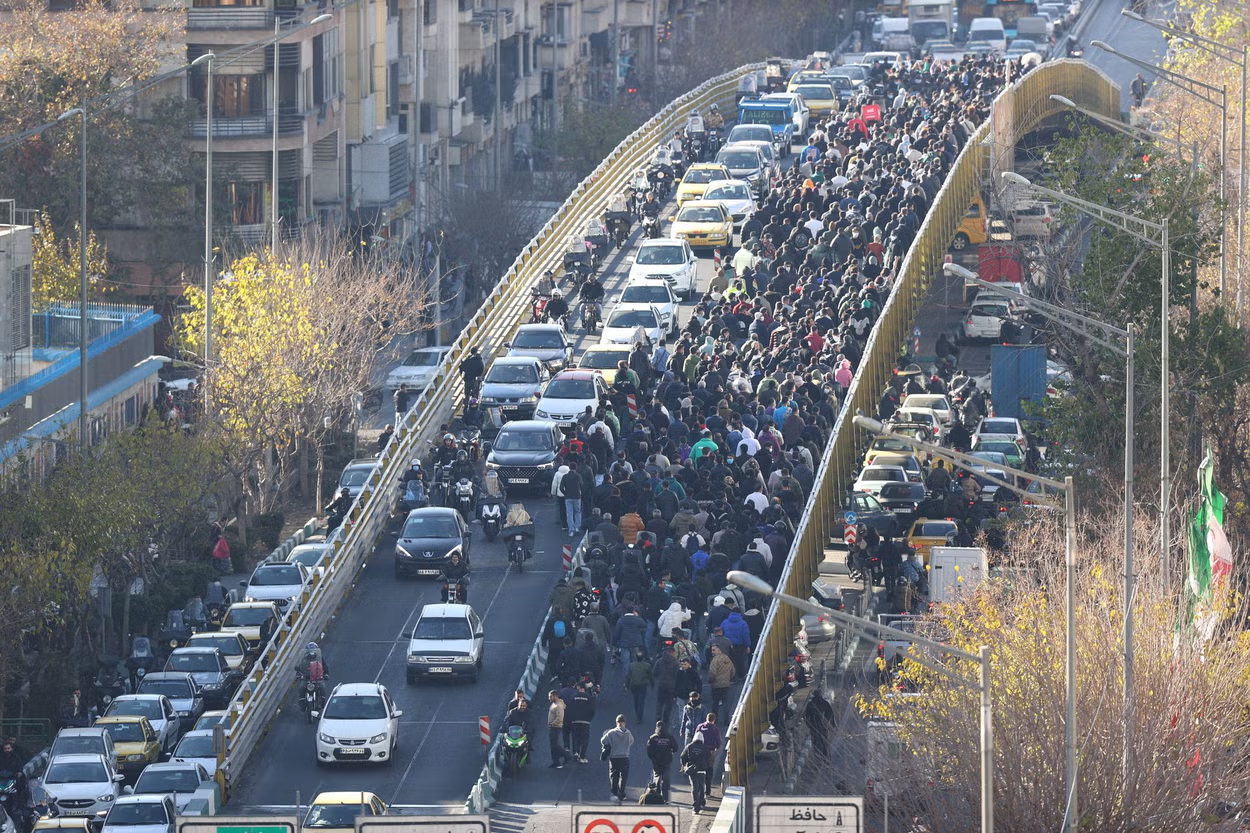
Protests and strikes in Iran, sparked by inflation and the devaluation of the national currency, the rial, have spread beyond the capital, Tehran, reaching several other cities on the third day of unrest.
The protests began on Sunday when shopkeepers in Tehran’s Grand Bazaar went on strike after the Iranian rial hit a record low against the US dollar on the open market. The strikes quickly escalated into larger demonstrations, with videos verified by BBC Persian showing protests in cities such as Karaj, Hamedan, Qeshm, Malard, Isfahan, Kermanshah, Shiraz, and Yazd. Police were seen using tear gas in an attempt to disperse the crowds.
In a rare acknowledgment, the Iranian government stated that it “recognizes the protests” and is willing to listen to “harsh voices” with patience. President Masoud Pezeshkian later announced on X (formerly Twitter) that he had instructed the interior minister to hold talks with “representatives” of the protesters, promising measures to address the issues at hand.
In a significant move, President Pezeshkian also accepted the resignation of Iran’s central bank governor, Mohammadreza Farzin, replacing him with former economy and finance minister Abdolnasser Hemmati.
University students have also joined the protests, chanting anti-government slogans such as “Death to the dictator,” referring to Supreme Leader Ayatollah Ali Khamenei, who holds ultimate power in Iran. Some protesters were also heard chanting slogans in support of Reza Pahlavi, the son of the late Shah Mohammad Reza Pahlavi, who was overthrown in the 1979 Islamic Revolution. Reza Pahlavi, who lives in exile in the US, expressed his solidarity with the protesters on X, writing: “I am with you. Victory is ours because our cause is just and because we are united.”
The US State Department also expressed support for the protests, praising the courage of those involved and standing with those seeking “dignity and a better future” after years of failed economic policies.
The economic crisis in Iran, marked by rampant inflation and currency devaluation, was reportedly high on the agenda during a meeting between US President Donald Trump and Israeli Prime Minister Benjamin Netanyahu in Florida. Trump acknowledged Iran’s economic struggles, stating that “their economy is no good,” and hinted at potential support for further Israeli airstrikes on Iran’s nuclear and ballistic missile programs if the country resumes them.
In response to the ongoing unrest, President Pezeshkian vowed that Iran would retaliate severely against any “oppressive act of aggression.” Iran’s Supreme Leader, Ayatollah Khamenei, has repeatedly dismissed the idea that mass protests could bring down the regime, despite Israeli efforts to encourage unrest. “They wanted to create sedition on the streets… But people were absolutely not influenced by what the enemy wanted,” Khamenei said in September.
Adapted from BBC News