
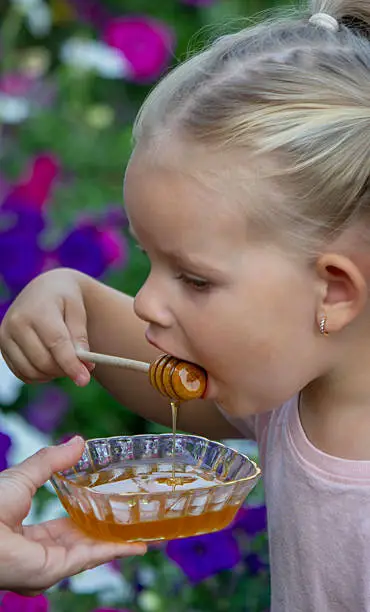
Honey for babies is a food-safety topic that deserves particular attention because the usual advice for introducing new foods does not apply to honey. While many foods can become part of complementary feeding during infancy, honey should be avoided until a child reaches 12 months of age. The reason is not an allergy or the amount of sugar alone. Honey can contain spores of Clostridium botulinum, the bacterium associated with infant botulism, a rare but potentially serious illness.
For parents and caregivers, the rule is straightforward: do not give honey to a baby younger than 12 months. That includes honey added directly to food or drinks as well as products containing honey. It also means avoiding the common practice of putting honey on a pacifier or using it as a way to soothe a baby.
Once a child reaches 12 months, honey no longer carries the specific infant-botulism restriction that applies during the first year. However, honey is still an added sugar, so it makes sense to use it sparingly. Parents can introduce a small amount alongside familiar foods while continuing to build a varied diet based on nutritious ingredients. Understanding both parts of the guidance—when honey becomes safe and why moderation still matters—can make feeding decisions much easier.
Why Honey for Babies Under 12 Months Is Unsafe
The main concern with honey during infancy is infant botulism. Honey can sometimes contain spores of Clostridium botulinum. Older children and adults generally have a digestive system that makes it difficult for these spores to cause the same problem. In babies under one year, however, the developing intestinal environment can allow the spores to grow and produce a toxin.
Infant botulism is uncommon, but its potential severity is why health authorities recommend a complete avoidance of honey during the first year.
This recommendation applies even when the honey appears clean, natural or high quality. You cannot determine from appearance whether honey contains the relevant bacterial spores.
For that reason, parents should not try to make honey safer by choosing a particular variety, brand or preparation method.
The 12-Month Rule for Honey
The simplest way to remember the guidance is to wait until the child is at least 12 months old.
Before the first birthday:
- Do not give honey as a food.
- Do not mix honey into baby food.
- Do not add honey to water or formula.
- Do not put honey on a pacifier.
- Avoid foods made with honey.
- Check ingredient labels on packaged foods.
This rule removes unnecessary uncertainty. Rather than trying to determine whether a particular honey product is safe for a younger baby, caregivers can simply avoid honey until after the first year.
What Happens After a Baby Turns One?
After 12 months, honey can be introduced as part of a normal diet. There is no special medical requirement to introduce it at a particular meal or in a specific quantity.
A practical approach is to start with a small amount in a food the child already knows. For example, a little honey can be stirred into plain yogurt or oatmeal. This allows the child to experience the flavour without making honey a major part of the meal.
However, reaching 12 months does not mean a child needs honey. It simply means the specific infant-botulism restriction has passed.
That distinction is important. Honey can be safe after the first birthday, but it does not automatically become a necessary or especially nutritious food.
Honey Is Still an Added Sugar
Honey is sometimes viewed as a healthier alternative to ordinary sugar because it is a natural product. However, natural does not mean that it should be consumed without limits.
Honey contributes added sugar to the diet. Young children can enjoy a wide range of foods without needing meals to be heavily sweetened. Keeping honey as an occasional ingredient can therefore help parents maintain variety and avoid making very sweet flavours a routine part of eating.
Instead of adding honey to every bowl of cereal or snack, caregivers can offer naturally sweet foods such as appropriately prepared fruit.
A balanced approach is more useful than treating honey as either a forbidden food forever or a food that should be included every day.
Easy Ways to Introduce Honey After 12 Months
When a child is old enough, honey can be introduced in familiar foods.
A small amount could be mixed into:
- Plain yogurt
- Oatmeal
- Suitable whole-grain foods
- Homemade foods where a small amount of sweetness is appropriate
There is no need to make honey the focus of the meal. In fact, using a small quantity gives the child an opportunity to experience the taste while keeping added sugar relatively low.
Parents should also continue offering foods with different flavours and textures. Children benefit from experiencing a broad range of foods rather than becoming accustomed to sweetness at every meal.
Check Food Labels Before the First Birthday
Avoiding a jar of honey is not enough. Honey can also appear as an ingredient in processed foods.
Before a child reaches 12 months, caregivers should check labels on foods such as cereals, baked goods, snacks, sauces and other prepared products. If honey appears among the ingredients, the product should not be given to a baby under one year.
This is particularly important because a packaged food may not look or taste strongly of honey. The ingredient list provides a more reliable way to determine whether a product contains it.
When in doubt, choosing a product without honey is the simpler option.
Why Honey Should Never Go on a Pacifier
Putting a sweet substance on a pacifier may sound like an easy way to encourage a baby to use it, but honey should never be used this way during the first year.
The issue is not limited to eating a spoonful of honey. If honey contains botulism spores, exposure can potentially occur through a small amount placed on a pacifier.
Caregivers should therefore avoid dipping a pacifier in honey or using honey as a soothing technique for infants.
Instead, use age-appropriate soothing methods recommended by a healthcare professional when necessary.
What If a Baby Accidentally Eats Honey?
Accidental exposure can understandably frighten parents. However, consuming honey once does not mean that a baby will necessarily develop infant botulism.
Parents should avoid trying to diagnose the situation themselves. If a baby younger than 12 months has consumed honey, particularly if a significant amount was involved, contacting a healthcare professional can provide appropriate guidance based on the circumstances.
It is also important to know the symptoms associated with infant botulism.
Potential warning signs can include:
- Constipation
- Difficulty feeding
- Reduced muscle strength
- A weak or unusual cry
- Reduced facial movement
- Drooping eyelids
- Breathing difficulties
Breathing problems or significant weakness require urgent medical attention.
Because infant botulism can become serious, caregivers should not wait for symptoms to become severe before seeking emergency help when a baby is having trouble breathing or appears seriously unwell.
Honey Does Not Replace Breast Milk or Formula
Honey should never be used as a substitute for breast milk or infant formula during the first year.
Complementary foods are generally introduced around six months when a baby is developmentally ready. During this period, caregivers can gradually offer suitable foods while continuing to provide breast milk or infant formula according to the child’s needs and healthcare guidance.
Adding honey to food does not improve its suitability for an infant. There are many age-appropriate foods that can provide different nutrients, tastes and textures without adding honey.
Parents can therefore focus on offering a varied selection of suitable foods rather than looking for ways to sweeten meals.
Other Foods Can Be Introduced Without Honey
The restriction on honey does not mean that babies need to avoid complementary foods generally.
As developmentally appropriate, complementary feeding can include suitable vegetables, fruits, grains and protein-rich foods. The exact foods and textures should match the child’s developmental stage and any advice provided by their healthcare professional.
Honey is simply different because it has a specific safety restriction during the first year.
That can sometimes create confusion when parents see honey used in recipes intended for older children. A recipe suitable for a toddler or adult is not necessarily appropriate for a baby under 12 months.
Age recommendations matter.
Keep Honey Occasional After 12 Months
Once honey is safe to introduce, moderation remains sensible.
A child does not need honey every day. Using a small amount occasionally allows honey to remain one ingredient among many rather than becoming a routine source of sweetness.
Parents can also encourage children to enjoy the natural flavours of fruits, vegetables, grains and other foods. Water and suitable milk can remain the main drink choices according to the child’s age and dietary needs.
The broader goal is not simply to introduce honey safely. It is to help children develop varied eating habits from an early age.
When to Speak With a Healthcare Professional
Parents and caregivers should seek professional advice when they are uncertain about honey exposure or notice concerning symptoms.
This is especially important if a baby under 12 months has consumed honey and subsequently develops unusual weakness, feeding difficulties, a weak cry, reduced movement or breathing problems.
Healthcare professionals can assess the situation and provide advice based on the child’s age, symptoms and exposure.
For immediate breathing difficulties or other signs of a serious medical emergency, seek urgent medical care rather than waiting for symptoms to resolve.
Understanding the basic rule makes honey easier to manage: keep it completely out of a baby’s diet during the first 12 months, then introduce it cautiously as an occasional food after the first birthday. That approach addresses the specific infant-botulism risk while also keeping added sugar in perspective.
Also Read:How to Fade Pimple Scars Naturally and Restore Healthy Skin