Gabon social media suspension raises concerns over free speech, business impact, and political stability amid rising unrest.
Gabon social media suspension has triggered widespread concern across the Central African nation, marking one of the most dramatic digital interventions since the country’s recent political transition. Authorities announced the decision “until further notice,” citing the spread of false information, cyberbullying, and the unauthorized disclosure of personal data as primary reasons. The move immediately placed Gabon at the center of a growing global debate over the balance between national security and digital freedom.
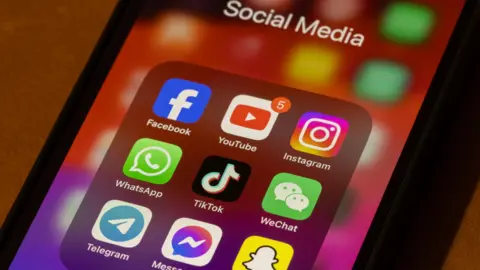
The announcement came during a televised statement by the High Authority for Communication, Gabon’s media regulator. Its spokesperson, Jean-Claude Mendome, warned that online content had deepened divisions and fueled conflict within the country. Although specific platforms were not officially named, partial disruptions to widely used services such as Facebook and TikTok were reported within hours. WhatsApp, another key communication tool, is also believed to be affected.
For many citizens, the Gabon social media suspension signals more than just a technical interruption. It reflects deeper political tensions under President General Brice Oligui Nguema, who assumed power after leading a military coup and later secured a decisive electoral victory. His administration now faces mounting social unrest, with teachers and civil servants striking over wages and working conditions. Against this backdrop, the digital shutdown has intensified scrutiny of the government’s approach to dissent and public discourse.
Why the Gabon Social Media Suspension Was Imposed
The High Authority for Communication justified the suspension by pointing to what it described as recurring dissemination of inappropriate and defamatory content. According to officials, online platforms had become channels for hate speech and messages that threaten social cohesion and national stability.
Mendome emphasized that such content could generate social conflict and undermine democratic progress. Authorities argue that temporary restrictions are necessary to restore order and protect institutions. However, critics question whether the measures are proportionate to the stated concerns.
Gabon’s political climate has grown increasingly tense in recent months. Teachers initiated strikes in December, demanding improved pay and working conditions. Similar grievances have spread to other public sectors, including healthcare and education. Social media has played a key role in organizing demonstrations and amplifying public complaints.
Economic and Social Impact
The economic consequences of the Gabon social media suspension are already visible. Small businesses that rely on digital marketing face immediate disruption. A restaurant owner in Libreville noted that nearly 40 percent of his customers discovered the business through online advertising and reviews. Without social platforms, he fears losing access to new clients.
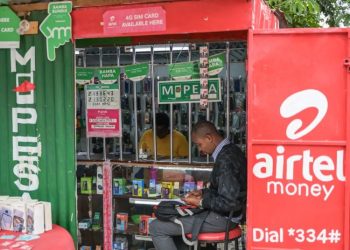
Digital platforms in Gabon are not merely recreational tools. Young entrepreneurs use them for product promotion, customer engagement, and mobile commerce. Influencers, freelancers, and small enterprises depend on visibility generated by social networks. Consequently, any prolonged restriction could slow economic activity in the informal and small business sectors.
At the same time, some citizens support the decision. A taxi driver in Libreville suggested that authorities must have had compelling reasons for imposing the ban. This perspective reflects a segment of the population that prioritizes stability over unrestricted online discourse.
Political Context and Historical Background
The Gabon social media suspension also revives memories of previous digital blackouts under the Bongo family’s decades-long rule. Past governments used internet disruptions during election periods to manage information flow. President Nguema had pledged reforms and greater transparency after taking office, even allowing independent media to film ballot counting during the last election.
His victory with over 90 percent of the vote was presented as a new chapter for Gabon. However, the current suspension raises questions about whether digital freedoms are secure under the new administration. The contrast between reform pledges and restrictive measures has become a central theme in public debate.
Freedom of Expression Versus National Security
Authorities maintain that freedom of expression remains a constitutional right in Gabon. Mendome reiterated that comment and criticism are protected under national law. Nonetheless, the broad language used to justify the suspension leaves room for interpretation.
Defining harmful content is often complex. While governments have a legitimate interest in preventing incitement and protecting personal data, blanket suspensions risk limiting legitimate political discussion. International observers frequently caution that sweeping restrictions can undermine democratic credibility.
Across Africa and beyond, governments increasingly grapple with the influence of social media during periods of unrest. Digital platforms accelerate information flow but also amplify misinformation. Gabon now joins a list of countries where authorities have chosen suspension over targeted moderation.
Public Reaction and Future Outlook
Reports of partial disruptions by mid-morning following the announcement confirm that enforcement is underway. Citizens continue to assess the practical implications. Many wonder how long the Gabon social media suspension will last and whether it will extend to additional platforms.
The government has not provided a timeline for restoration. Until clarity emerges, uncertainty will persist among businesses, activists, and everyday users. The coming weeks may determine whether this move remains temporary or signals a longer-term shift in Gabon’s digital governance.
As social unrest continues and public sector strikes evolve, the intersection of political stability and digital freedom will remain under scrutiny. Gabon’s experience highlights the broader challenge facing governments worldwide: managing online harm without compromising fundamental rights.