Dolly Parton, the singer-songwriter whose journey from rural poverty to international superstardom made her one of America’s most admired cultural figures, has died at the age of 80.
Parton died peacefully at her Nashville home on Tuesday, according to a statement issued on behalf of her family by her nephew, Bryan Seaver. The family said a small and private service would be held for close relatives.
Her death brings to a close a remarkable career that stretched across more than six decades and transformed Parton into far more than a country music icon. She was a songwriter, performer, actress, entrepreneur, author and philanthropist whose work touched generations across the United States and around the world.
In her final years, Parton had spoken publicly about health challenges, particularly after the death of her husband, Carl Dean, in March 2025. She acknowledged that the prolonged illness and eventual loss of her longtime husband had taken a toll on her own wellbeing.
From a Tennessee Cabin to the World Stage
Born on January 19, 1946, in rural Tennessee, Dolly Rebecca Parton grew up in a large family with limited financial means. She was one of 12 children and often spoke openly about her family’s poverty and the difficult conditions of her childhood.
Yet music was deeply woven into family life.
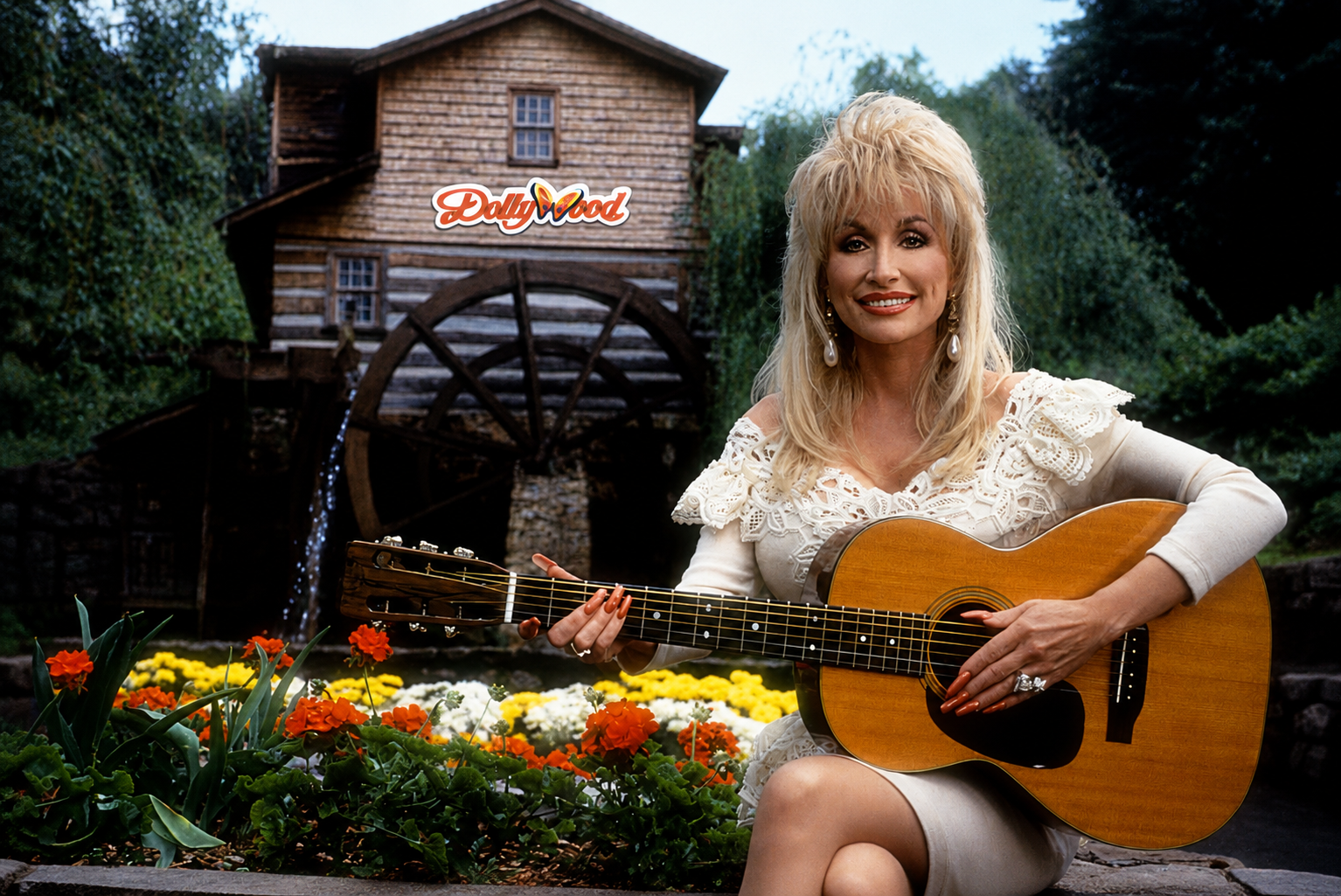
Her mother encouraged her creative abilities, while relatives exposed her to gospel, folk and country traditions. Parton received a guitar at a young age, learned to play and began writing songs while still a child.
That gift for storytelling would eventually become the foundation of an extraordinary career.
After completing high school, Parton moved to Nashville to pursue music professionally. On the day she arrived in the city, she met Carl Dean outside a laundromat. Their relationship would become one of the most enduring, though deliberately private, marriages in entertainment.
Parton signed an early recording contract with Monument Records in the mid-1960s and married Dean a year later. Her breakthrough accelerated after she joined The Porter Wagoner Show in 1967, where her television appearances and musical collaborations introduced her to a national audience.
By the early 1970s, she had begun establishing herself as a major force in country music, earning a No. 1 hit with “Joshua” and releasing songs that would later become defining parts of her catalogue.
The Songwriter Who Protected Her Own Legacy
Few decisions shaped Parton’s future as significantly as her determination to retain control over her songwriting.
At a time when many artists, particularly women, had limited influence over the business side of their careers, Parton worked to maintain ownership interests in her music through a publishing company established with her uncle and collaborator, Bill Owens.
That decision proved especially important when she chose to leave her professional partnership with Porter Wagoner and pursue an independent career.
The emotional separation inspired one of her most enduring compositions, “I Will Always Love You.” The song later became a global phenomenon when Whitney Houston recorded it for the 1992 film The Bodyguard, introducing Parton’s songwriting to an even larger international audience.
Parton also famously declined an opportunity for Elvis Presley to record the song under publishing conditions that would have required her to surrender a significant share of the rights. She later described the decision as painful but necessary, believing the song would remain an important part of what she could leave to her family.
Her instinct proved correct.
Throughout her career, Parton wrote more than 3,000 songs, creating an extraordinary catalogue that included “Jolene,” “Coat of Many Colors,” “9 to 5” and “I Will Always Love You.”
Her songs explored poverty, family, ambition, heartbreak and resilience, often turning personal experiences and ordinary life into stories with universal appeal.
Crossing Boundaries in Music and Film
Parton’s influence eventually expanded far beyond traditional country music.
She became one of the most successful crossover artists of her generation, releasing dozens of albums and achieving success on both country and pop charts. Her duet with Kenny Rogers, “Islands in the Stream,” became one of the best-known collaborations of the era.
She collected 11 Grammy Awards during her career and earned recognition across multiple genres, demonstrating an ability to evolve while maintaining her distinctive voice and personality.
Hollywood also embraced her.
Parton made her feature film debut in the 1980 workplace comedy 9 to 5, starring alongside Jane Fonda and Lily Tomlin. The film was a major success, while Parton’s title song became an anthem for workers and women confronting inequality in the workplace.
The inspiration for the song came from an unusually simple source: the sound created by Parton’s acrylic nails. She transformed that rhythm into one of the most recognizable workplace songs in American popular culture.
She later appeared in films including The Best Little Whorehouse in Texas and Steel Magnolias, further expanding her audience and proving that her appeal extended well beyond the recording studio.
More Than a Musician
As Parton’s fame and business success grew, she built an empire that included books, entertainment ventures and Dollywood, the major theme park destination in Pigeon Forge, Tennessee.
But perhaps her most significant contribution outside entertainment was her commitment to philanthropy.
Through the Dollywood Foundation and her Imagination Library programme, Parton helped provide books to children and families around the world. The initiative eventually distributed more than 300 million books, becoming one of the largest early-literacy programmes of its kind.
The project was inspired in part by her father, who was unable to read.
Parton often spoke about the opportunities that literacy could create and described the programme as a tribute to him. What began as an effort to support children in her home region eventually grew into an international initiative.
Her charitable work also included scholarships and emergency support for families affected by disasters.
During the Covid-19 pandemic, Parton donated $1 million to research at Vanderbilt University, funding that contributed to work connected to the development of the Moderna vaccine.
She later said she was proud to have played even a small role in an effort that could help people around the world.
A Voice for Acceptance
While Parton generally avoided becoming closely identified with specific political figures or parties, she frequently spoke about kindness, compassion and accepting others.
Her public image was built on humour and glamour, but it was also marked by an unusual ability to connect with people from different backgrounds and generations.
She became particularly admired for refusing to allow ideological divisions to define how she treated others.
Her music and film work also reached audiences beyond traditional country music, including younger listeners and members of the LGBTQ+ community who found inspiration in her messages of individuality and acceptance.
Even when discussing controversial issues, Parton often returned to a simple principle: people should be treated with dignity.
A Private Love Story Behind a Public Life
For someone who spent decades under intense public attention, Parton fiercely protected one part of her life: her marriage.
Carl Dean remained largely outside the spotlight throughout their nearly six decades together. The couple’s relationship stood in sharp contrast to Parton’s highly public career, with Dean rarely appearing at major entertainment events.
Parton often said that their differences and independence helped make the marriage work.
Dean’s death in March 2025 was one of the most difficult moments of her later life. In tribute, Parton released “If You Hadn’t Been There,” a deeply personal song honouring the man who had supported her throughout her extraordinary career.
Their story became another reflection of the balance Parton maintained throughout her life — a woman whose public persona was recognised around the world, yet who kept her most important relationships close and private.
An Enduring American Legacy
Dolly Parton’s life was a story of ambition, talent and remarkable reinvention.
She emerged from a one-room cabin in Tennessee and became one of the world’s most recognisable entertainers. She succeeded as a songwriter in an industry where control over publishing could determine an artist’s future. She crossed from country music into pop, film, television, publishing and business without losing the identity that first made audiences love her.
Yet her greatest legacy may not be measured only in records sold, awards won or songs written.
It can also be found in the millions of children who received books through her literacy programme, the communities supported through her charitable work and the generations of artists who saw in her career an example of independence and creative ownership.
For millions of admirers, Dolly Parton was more than a superstar.
She was a storyteller who transformed the details of her own life — poverty, family, heartbreak, love and hope — into songs and projects that made people feel seen.
Her voice may now be silent, but the stories she wrote, the opportunities she created and the generosity she showed will continue to carry her legacy forward.
Dolly Parton leaves behind a body of work that crossed genres, generations and borders — and a simple message that defined much of her life: success means little unless it creates something meaningful for others.