
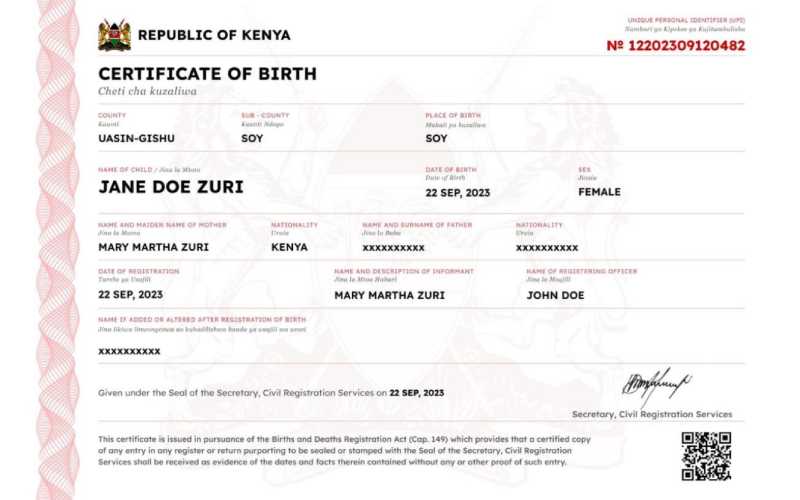
Birth certificates online services are set to transform how Kenyans access one of the country’s most important legal documents. As government agencies continue to embrace digital transformation, citizens are beginning to experience faster, more convenient, and more efficient public services. The latest development allows individuals to download and print birth certificates online, reducing the need for lengthy visits to government offices and streamlining access to critical documentation.
The move comes at a time when Kenya is accelerating the digitisation of public services to improve service delivery and enhance citizen convenience. Over the past few years, government institutions have invested heavily in technology-driven solutions aimed at reducing paperwork, eliminating bureaucratic delays, and making services more accessible to people across the country. The introduction of birth certificates online represents another milestone in this broader digital transformation agenda.
Access to birth certificates is essential for many aspects of daily life, including school admissions, national identification applications, passport processing, employment opportunities, and access to government programs. By making these documents available online, the government hopes to save citizens time and resources while improving efficiency within public administration systems.
Birth Certificates Online Mark a New Era in Service Delivery
The Kenyan government has announced significant progress in the digitisation of public services, with birth certificates online now available for eligible citizens. The initiative is designed to simplify access to one of the most frequently requested civil registration documents.
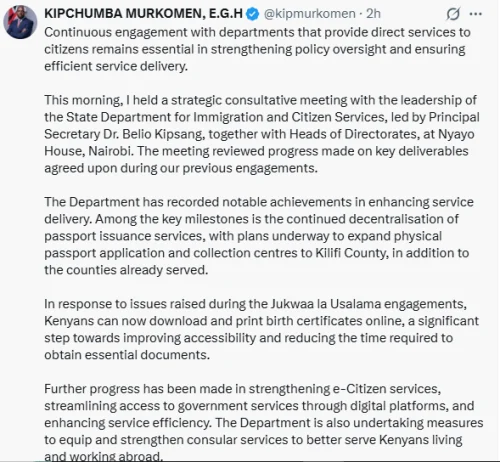
The announcement was made by the Cabinet Secretary for Interior and National Administration, Kipchumba Murkomen, following a strategic consultative meeting with officials from the State Department for Immigration and Citizen Services.
According to the government, the new system enables Kenyans to download and print birth certificates electronically, reducing dependence on physical visits to government offices. The development is expected to improve convenience while making service delivery faster and more efficient.
Public Feedback Helped Shape the Initiative
The introduction of birth certificates online follows concerns and recommendations raised during the Jukwaa la Usalama public engagement forums. These forums have provided citizens with an opportunity to share their experiences and suggest improvements in government service delivery.
Feedback from members of the public highlighted challenges associated with obtaining birth certificates through traditional channels. Long queues, travel costs, and processing delays were among the concerns frequently raised during these engagements.
In response, government agencies accelerated efforts to digitise the service and make the process more user-friendly. The result is a system that allows citizens to access their documents more conveniently from different parts of the country.
How the New System Benefits Citizens
The availability of birth certificates online offers several practical advantages for Kenyans.
First, citizens will no longer need to make repeated trips to government offices to obtain copies of their documents. This can significantly reduce travel expenses and save valuable time.
Second, online access provides greater convenience for individuals living in remote areas where government service centres may be located far away. Citizens can access services more easily through digital platforms.
Third, the initiative is expected to reduce congestion at registration offices, allowing government staff to process requests more efficiently and focus on other critical services.
Additionally, the online system supports the government’s broader objective of improving public sector efficiency through technology-driven solutions.
Strengthening Kenya’s Digital Government Agenda
The rollout of birth certificates online forms part of Kenya’s ongoing efforts to modernise public administration and expand digital government services.
In recent years, various government departments have introduced online platforms that allow citizens to access services, make payments, submit applications, and obtain official documents electronically. These initiatives are aimed at creating a more responsive and citizen-centred public service environment.
The digitisation of civil registration services demonstrates how technology can help simplify interactions between citizens and government institutions. It also aligns with national goals focused on innovation, efficiency, and improved service accessibility.
Meeting Growing Demand for Essential Documents
Birth certificates remain among the most important legal documents required throughout a person’s lifetime. They serve as proof of identity, age, nationality, and parentage.
Many government and private sector processes require birth certificates, including school enrolment, examination registration, passport applications, national identity card processing, and access to social services.
By enabling online downloads and printing, the government is helping ensure that citizens can access these documents more quickly whenever they are needed. The new system is expected to reduce waiting times and improve overall customer satisfaction.
Immigration Department Continues Digital Transformation
The announcement followed consultations involving senior officials from the State Department for Immigration and Citizen Services, led by Principal Secretary Dr Belio Kipsang and directorate heads based at Nyayo House in Nairobi.
The discussions focused on advancing service delivery reforms and identifying additional opportunities for digitisation. Government leaders emphasized the importance of leveraging technology to improve citizen experiences while maintaining service reliability and security.
As more services move online, Kenya continues positioning itself as one of Africa’s leading adopters of digital government solutions. The introduction of birth certificates online represents another important step toward achieving a more accessible, efficient, and technology-enabled public service system for all citizens.