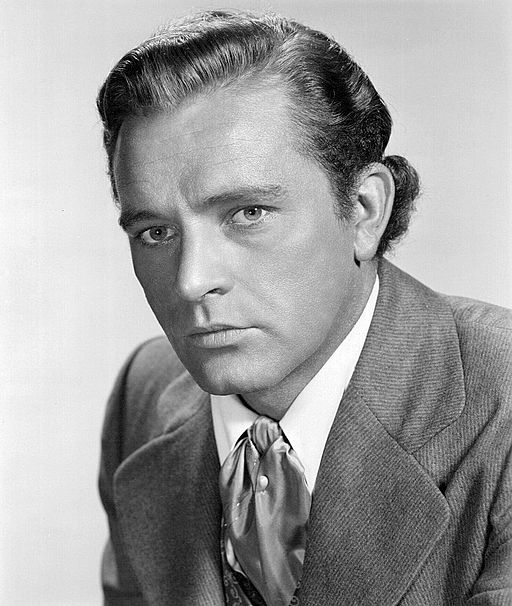
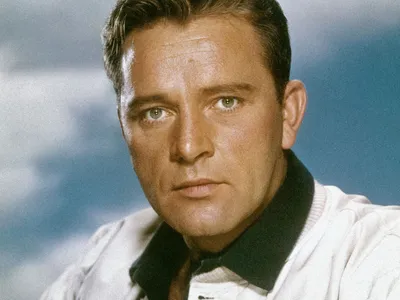
Richard Burton, born Richard Walter Jenkins Jr. on November 10, 1925, in Pontrhydyfen, Glamorgan, Wales, remains one of the most magnetic and powerful actors in 20th-century cinema. Rising from humble beginnings in a small mining village, he became known for his commanding stage presence, rich baritone voice, and ability to blend classical training with raw emotion.
Early Life and Background
Burton was the twelfth of thirteen children born to Richard Walter Jenkins Sr., a coal miner, and Edith Maude Jenkins, a homemaker. Tragedy struck early when his mother passed away shortly after childbirth, leaving the family scattered among relatives. His older sister Cecilia “Cis” Jenkins took him in and raised him alongside her own children, providing the first stable home in his otherwise difficult childhood.
Growing up in a Welsh-speaking household, Burton’s early years were shaped by poverty, faith, and storytelling — influences that later defined his deep connection to literature and performance. His father’s alcoholism and gambling added to the family’s struggles, but young Richard’s determination stood out even in hardship.
Family and Siblings
Burton’s family was large and close-knit, though marked by loss. Two sisters named Margaret Hannah died in infancy. Among his siblings, Ifor Jenkins and Thomas Henry Jenkins were well remembered for their resilience and support during his rise to fame. His brother Graham Jenkins, born in 1927, shared an especially intimate bond with him, later chronicling their shared story in the memoir Richard Burton: My Brother (1988). Graham often doubled as his stand-in on film sets, humorously recalling moments such as standing in for Burton during scenes with Elizabeth Taylor.
From Schoolboy to Stage Actor
Burton’s life changed when he met Philip Burton, his schoolmaster and mentor, who recognized his natural gift for oratory. Philip adopted him in 1943, giving him his famous surname and guiding him toward acting.
After serving as a navigator trainee in the Royal Air Force during World War II, Burton made his professional debut in Emlyn Williams’s The Druid’s Rest (1943). His major breakthrough came five years later in The Lady’s Not for Burning (1948), a performance that led to a successful Broadway transfer in 1949.
Hollywood Breakthrough and Global Fame
Burton’s film debut came in The Last Days of Dolwyn (1949), but stardom followed with My Cousin Rachel (1952), opposite Olivia de Havilland, and The Robe (1953), where his portrayal of a conflicted Roman soldier brought him his first Academy Award nomination.
Throughout the 1950s, he became one of the world’s leading Shakespearean actors, dazzling audiences as Hamlet, Coriolanus, and Henry V at the Stratford Festival, drawing comparisons to Laurence Olivier for his mastery of classical verse. His transition to film solidified his reputation, blending intellectual gravitas with rugged charisma.
By the late 1950s, Burton embraced the British New Wave, starring in Look Back in Anger (1959) as the disillusioned Jimmy Porter — a role that redefined him as a modern actor unafraid of emotional intensity.
Love and Career in the 1960s
The 1960s marked both professional triumph and personal chaos. Burton’s life changed forever while filming Cleopatra (1963), where he met Elizabeth Taylor. Their passionate and controversial romance dominated global headlines and led to two marriages and two divorces. Together, they starred in several acclaimed films, including The V.I.P.s (1963), The Sandpiper (1965), and Who’s Afraid of Virginia Woolf? (1966), the last of which earned both stars Academy Award nominations.
Outside of his collaborations with Taylor, Burton delivered standout performances in The Spy Who Came in from the Cold (1965), Where Eagles Dare (1968), and Anne of the Thousand Days (1969). Each showcased his commanding versatility — from stoic intelligence to fiery vulnerability.
Later Career and Stage Return
Burton returned to the stage with the Broadway musical Camelot (1960), winning a Tony Award for his role as King Arthur, a part he later revived to further acclaim in 1980. He continued to balance theater with film, starring in Equus (1977) and lending his resonant voice to narrations, including 1984 (1984) — his final performance.
Despite battling alcoholism and health issues, his dedication to acting never waned. His introspective performances in later years revealed a depth honed by both triumph and turmoil.
Awards and Recognition
Though Burton never won an Oscar, he remains one of the most nominated actors in Academy history, with seven nominations for The Robe (1953), Becket (1964), The Spy Who Came in from the Cold (1965), Who’s Afraid of Virginia Woolf? (1966), Anne of the Thousand Days (1969), The Assassination of Trotsky (1973), and Equus (1977).
He received:
- Two Tony Awards for Camelot (1960) and its 1980 revival.
- A Grammy Award (1964) for The Richard Burton Poems of Dylan Thomas.
- Two Golden Globes for Anne of the Thousand Days (1969) and Equus (1977).
- A BAFTA Award for The Spy Who Came in from the Cold (1965).
In 1978, he also received an Emmy nomination for his appearance on Masterpiece Theatre.
Death and Legacy
Richard Burton passed away on August 5, 1984, in Geneva, Switzerland, at the age of 58, due to a cerebral hemorrhage. His funeral was attended by family, close friends, and colleagues, including Elizabeth Taylor, who placed a single red rose on his grave.
Burton’s legacy endures as one of cinema’s greatest voices and Shakespeare’s most compelling interpreters. From the coal mines of Wales to the golden stages of Hollywood, he embodied brilliance and contradiction — a man of immense talent who lived passionately, loved deeply, and left behind a timeless body of work.