
In a move that has captured the attention of both medical professionals and the general public, seven major medical associations have filed a lawsuit against the Centers for Disease Control and Prevention (CDC), aiming to reverse recent changes to the U.S. childhood vaccination schedule. The new guidelines, issued by the U.S. Department of Health and Human Services (HHS), have sparked controversy due to the narrowing of vaccine recommendations for certain diseases, including meningococcal disease, hepatitis B, and hepatitis A. These organizations argue that the new recommendations could undermine public health efforts, potentially leaving vulnerable populations at risk. In this blog post, we’ll explore the specifics of the lawsuit, the changes to the CDC guidelines, and the potential consequences for public health.
The Lawsuit: Who Is Behind It?
The lawsuit is being led by seven prominent medical groups, each of which has a significant influence on health policy and practice. These groups include:
- American Academy of Pediatrics (AAP): The leading organization of pediatricians in the U.S., advocating for the health and well-being of children.
- American College of Physicians (ACP): A professional organization representing internal medicine physicians.
- American Public Health Association (APHA): An organization working to advance public health and promote health equity.
- Infectious Diseases Society of America (IDSA): An association that represents healthcare professionals working in infectious diseases.
- Massachusetts Public Health Association (MPHA): A state-level organization that advocates for public health improvements in Massachusetts.
- Society for Maternal-Fetal Medicine (SMFM): A professional society focusing on maternal and fetal health.
- Massachusetts Chapter of the American Academy of Pediatrics: A regional branch of the AAP representing pediatricians in Massachusetts.
Together, these organizations have come together to challenge the updated vaccine recommendations on the grounds that they could undermine decades of progress in preventing infectious diseases in children.
What Are the Changes to the CDC Vaccine Schedule?
Earlier this month, the U.S. Department of Health and Human Services (HHS) announced changes to the CDC’s childhood vaccination schedule. Some of the most notable modifications include:
- Narrowing Recommendations for Certain Vaccines:
The CDC now recommends that vaccinations against meningococcal disease, hepatitis B, and hepatitis A be limited to those at higher risk for infections. Previously, these vaccines were recommended for all children. - Flu, COVID-19, and Rotavirus Vaccines:
The updated schedule now calls for these vaccines to be administered based on “shared clinical decision-making.” This means that parents will need to consult with healthcare providers to decide whether these vaccines are appropriate for their child, rather than following a universal vaccination policy. - Vaccine Coverage by Insurers:
Despite the changes to the schedule, HHS assures that all insurers will continue to cover vaccines against flu, COVID-19, and rotavirus, making it financially accessible for families who opt for them.
While the changes are presented as a move toward more tailored healthcare, they have sparked significant concern among public health professionals. Critics argue that the alterations could lead to decreased vaccination rates, leaving children vulnerable to preventable diseases.
Why Are Medical Groups Opposing the Changes?
The medical groups involved in the lawsuit argue that the new guidelines could have serious consequences for public health. They believe that the changes could result in lower vaccination rates, especially in communities that are already vulnerable to outbreaks of infectious diseases. By narrowing the scope of vaccine recommendations, the lawsuit claims that the CDC is undermining the broader public health goals of universal immunization.
The groups also emphasize that vaccines play a crucial role in protecting both individuals and the community at large. For diseases like meningitis and hepatitis, the groups argue that the risks associated with these infections are too high to limit vaccine recommendations solely to high-risk individuals. By doing so, they fear that outbreaks could resurface in areas where vaccinations were previously widespread.
Furthermore, the shift toward “shared clinical decision-making” for flu, COVID-19, and rotavirus vaccines is concerning to these groups, as it introduces variability into vaccine administration. They worry that this could lead to confusion among parents and healthcare providers, and ultimately result in lower vaccination rates, particularly among children in high-risk communities.
Potential Consequences for Public Health
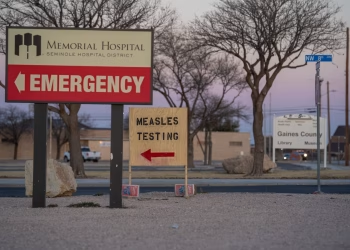
The consequences of these changes could be significant, both for individual children and for public health as a whole. If fewer children are vaccinated, we could see a resurgence of preventable diseases, which could strain the healthcare system and lead to unnecessary deaths. In recent years, outbreaks of diseases like measles and whooping cough have highlighted the importance of maintaining high vaccination rates.
Moreover, the changes to the CDC’s vaccine schedule could undermine efforts to achieve herd immunity, a critical factor in protecting those who are unable to receive vaccines due to medical reasons. If vaccination rates fall too much, the entire community could be at risk, as vulnerable populations like infants, the elderly, and those with compromised immune systems are more susceptible to infection.