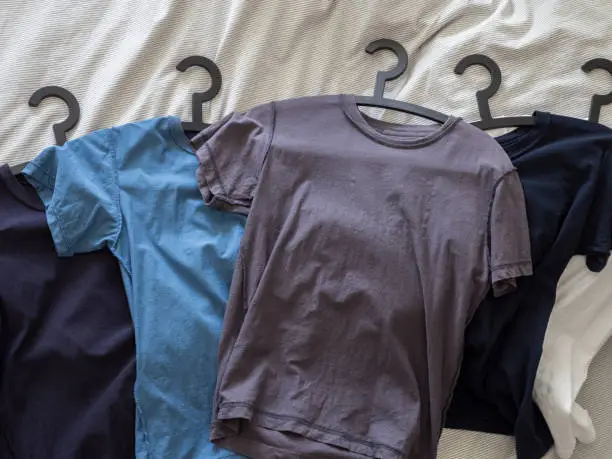
Hanger bumps can make T-shirts look untidy, even when they are freshly washed and carefully stored. These raised points usually appear around the shoulders when a hanger stretches the fabric or concentrates the garment’s weight in the wrong places. Fortunately, preventing hanger bumps is straightforward when you choose suitable hangers and use the right clothing storage methods.
What Causes Hanger Bumps on T-Shirts?
Hanger bumps develop when the shoulder fabric stretches over the ends of a hanger and retains that shape. The problem is particularly noticeable on soft cotton, lightweight jersey and stretchy knit fabrics. These materials can change shape when they are left under tension for extended periods.
The size and shape of the hanger also matter. A hanger that is too wide may push the shoulder seams outward, while a narrow hanger may create pressure points where the fabric rests. Wire hangers can make the problem worse because they offer little support across the shoulders.
However, the hanger is not always the only cause. Heavy T-shirts can stretch under their own weight, particularly when they remain suspended for long periods. Damp clothing can also become heavier and more vulnerable to distortion.
The good news is that you do not need to replace your entire wardrobe to solve this problem. Small changes to your storage routine can help preserve the original shape of your clothes. Choosing the correct hanger, folding heavier shirts and allowing garments to dry properly can all make a difference.
It is also worth remembering that different fabrics need different care. A lightweight T-shirt may hang comfortably on a well-fitted hanger, while a thick cotton shirt may retain its shape better when folded. Understanding these differences helps you choose the most suitable storage method for each garment.
Whether you are organising a small wardrobe or caring for a collection of everyday shirts, these practical tips can help prevent shoulder marks and keep your T-shirts looking neat for longer.
1. Choose the Correct Hanger Size
One of the simplest ways to prevent hanger bumps is to use a hanger that matches the width of your T-shirt.
Oversized hangers can push the shoulders outward, creating raised points near the sleeves. Meanwhile, hangers that are too narrow may allow the shoulder fabric to collapse or stretch unevenly.
Choose a hanger that fits comfortably inside the shoulder seams. Ideally, its ends should support the garment without extending beyond the natural shoulder line.
When organising your wardrobe, consider keeping different hanger sizes for different garments. This small adjustment can help shirts maintain their shape during everyday storage.
2. Use Rounded or Padded Hangers
The shape of a hanger influences how evenly it supports a T-shirt. Rounded hangers distribute the garment across a broader surface, reducing the pressure created by sharp edges.
Padded hangers can be especially helpful for delicate fabrics that are more susceptible to stretching. Their cushioning provides a softer contact surface and helps garments sit more naturally.
When choosing hangers, look for:
- Smooth, rounded shoulder edges.
- A width that matches the garment.
- A sturdy construction that does not bend easily.
- A surface that will not snag the fabric.
These features help reduce unwanted pressure on the shoulders.
3. Fold Heavy T-Shirts Instead of Hanging Them
Thick cotton T-shirts and oversized shirts can stretch under their own weight when suspended for long periods. Folding them is often a better way to maintain their original shape.
Start by laying the shirt on a clean, flat surface. Smooth out wrinkles, fold the sleeves inward and bring the sides towards the centre. Then fold the shirt into a compact shape suitable for your drawer or shelf.
Avoid stacking too many heavy garments on top of one another, as excessive pressure can create creases.
Folding is particularly useful for shirts you do not wear frequently. It also helps you save wardrobe space while reducing the risk of shoulder distortion.
4. Position T-Shirts Correctly on Hangers
Even a suitable hanger can create bumps if the T-shirt is positioned incorrectly.
When hanging a shirt, align the shoulder seams with the hanger’s natural edges. The fabric should rest smoothly rather than stretch tightly over the ends.
Check that the sleeves fall naturally and that neither shoulder is pulled farther outward than the other.
If the hanger is difficult to position without stretching the fabric, it may be too large or unsuitable for that particular garment.
Taking a few seconds to position your shirts properly can help prevent unnecessary distortion.
5. Replace Thin Wire Hangers
Wire hangers are common because they are inexpensive and take up little space. However, their narrow shape can concentrate a T-shirt’s weight in small areas around the shoulders.
They may also bend under heavier garments, creating uneven support.
Consider replacing them with smooth plastic or wooden hangers that have appropriately rounded shoulders. Padded alternatives may also work well for lightweight or delicate shirts.
You do not necessarily need expensive hangers. The important factors are the correct width, a smooth surface and sufficient support for the garment.
6. Avoid Crowding Your Wardrobe
A tightly packed wardrobe can cause clothes to press against one another. This makes it harder for T-shirts to hang naturally and may create additional creases.
Leave enough space between hangers for garments to sit comfortably. You should be able to move a shirt along the rail without forcing it past several tightly packed items.
If your wardrobe is small, consider folding everyday T-shirts and hanging only those that benefit from suspended storage.
Better spacing also makes it easier to see your clothes, select outfits and maintain an organised wardrobe.
7. Fold Shirts You Rarely Wear
T-shirts that remain on hangers for months may develop shoulder marks, especially if the hangers are poorly fitted or the fabric is heavy.
If you rarely wear a particular shirt, consider folding it and placing it in a drawer or on a shelf.
Before storing it, ensure the shirt is clean and completely dry. Fold it neatly to avoid creating deep creases, and keep it away from damp areas.
This approach is particularly useful for seasonal clothing, spare shirts and garments that are not part of your regular rotation.
8. Select Fabric-Friendly Hangers
Different hanger surfaces provide different benefits. Choosing one that suits your T-shirt fabric can help prevent stretching and snagging.
Velvet-covered hangers provide grip and can stop clothes from sliding off. However, they still need to be correctly sized to avoid shoulder bumps.
Padded hangers provide cushioning, while smooth plastic and rounded wooden hangers can offer reliable support for everyday shirts.
Avoid hangers with rough edges, exposed sharp parts or damaged surfaces. These can catch threads and cause unnecessary wear.
For the best results, match the hanger to the garment rather than using the same type for every item.
9. Insert Hangers Through the Bottom Opening
Pulling a hanger through a tight neckline can stretch the collar, particularly on fitted T-shirts and garments made from stretchy materials.
One alternative is to slide the hanger through the bottom opening and guide it upwards into position.
This method can reduce unnecessary strain on the neckline. However, it does not eliminate shoulder bumps if the hanger itself is too wide or has sharp edges.
Always position the hanger carefully and avoid pulling the fabric forcefully. If the garment is especially delicate, folding it may be the better option.
10. Let T-Shirts Dry Properly Before Hanging
Damp T-shirts can be heavier than dry ones. When suspended, that additional weight may increase stretching, particularly in soft knitted fabrics.
Follow the garment’s care label when washing and drying your clothes. Once a T-shirt is completely dry, decide whether it is suitable for hanging or should be folded.
For heavy or delicate shirts, drying them flat may help reduce stretching. If you hang a garment to dry, use a suitable support and avoid pulling the shoulders into an unnatural position.
Never place damp clothing in a crowded wardrobe. Allowing it to dry completely also helps prevent unpleasant odours and moisture-related problems.
11. Smooth Out Existing Hanger Bumps
If hanger bumps have already appeared, you may be able to reduce them without replacing the shirt.
First, remove the T-shirt from the hanger and gently reshape the shoulders with your hands. Allow the fabric to relax on a flat surface.
If the marks remain, consider using a garment steamer or an iron on a setting suitable for the fabric. Always check the care label before applying heat.
For delicate materials, test the method on an inconspicuous area when appropriate. Avoid pressing directly onto prints or decorative details unless the care instructions permit it.
Do not stretch the shoulders forcefully in an attempt to flatten them. Gentle reshaping and suitable heat, when permitted, are safer approaches.
12. Store Delicate T-Shirts With Extra Care
Lightweight knits, stretchy fabrics and delicate T-shirts may be more vulnerable to changes in shape.
For these garments, folding is often a practical storage choice. Place them on a clean shelf or in a drawer where they will not be compressed by heavy clothing.
If you prefer to hang a delicate shirt, choose a correctly sized hanger with rounded or padded shoulders.
Avoid pulling the neckline over a hanger that is difficult to insert. Instead, use a method that minimises stretching.
Pay attention to the garment’s care label because different fabrics respond differently to pressure, moisture and heat.
13. Inspect Your Hangers Regularly
Damaged hangers can create problems even when their original design is suitable for your clothes.
Check your wardrobe for bent wire, cracked plastic, rough wooden edges and loose padding. Replace hangers that no longer provide stable support.
Also, remove any hanger that leaves visible marks on several garments. It may be too wide, too narrow or poorly shaped for your T-shirts.
A quick inspection during wardrobe cleaning can help you identify problems before they affect more clothes.
14. Match Storage Methods to Fabric Weight
Not every T-shirt should be stored in the same way. Fabric weight, construction and stretch all influence how a garment behaves on a hanger.
Lightweight shirts may hang well when supported by a suitable hanger. Heavier cotton T-shirts often benefit from folding because their weight can pull the shoulders downward.
Stretchy knits may also retain their shape better when stored flat, especially if they are delicate or loosely constructed.
When deciding how to store a garment, consider three things: its weight, how easily it stretches and how long it will remain in storage.
Choosing the right method for each shirt can reduce shoulder marks and help your clothes last longer.
15. Follow Proper Washing and Clothing Care Practices
Good storage begins with proper garment care. Rough handling, excessive heat and unsuitable drying methods can affect the shape of T-shirts before they even reach the wardrobe.
Read the care label and use the recommended washing and drying settings. Avoid pulling wet shirts aggressively when removing them from a washing machine or adjusting their shape.
After washing, smooth the fabric gently and allow the garment to dry according to its care instructions.
When storing the shirt, make sure it is completely dry and choose a hanger or folding method that suits its construction.
Combining proper washing, careful drying and appropriate storage provides a practical way to reduce stretching and preserve the appearance of everyday clothing.
Keep Your T-Shirts Looking Smooth and Well-Maintained
Preventing hanger bumps does not require complicated wardrobe changes. The most important steps are choosing the right hanger size, avoiding sharp edges and recognising when folding offers better support than hanging.
For heavier T-shirts, folding can reduce the strain placed on the shoulders. For lighter garments, a smooth, correctly sized hanger may provide all the support needed.
If shoulder marks appear, gentle reshaping and fabric-appropriate steaming may help restore the garment’s appearance. However, results depend on the material and how much stretching has occurred.
By developing a consistent clothing care routine, you can keep your T-shirts organised, reduce avoidable wear and maintain their shape for longer.