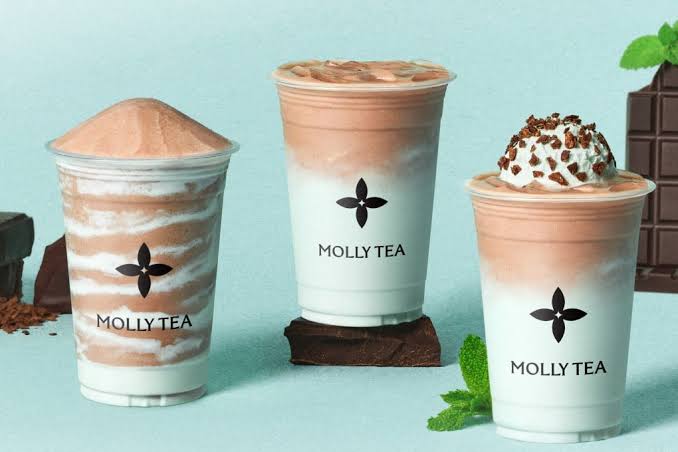
Molly Tea has found itself at the center of one of China’s most closely watched trademark disputes after a court ordered the fast-growing tea chain to pay Louis Vuitton 10.3 million yuan over a floral logo design. The case has moved beyond a fight between a beverage company and a luxury house. It has opened a wider conversation about branding, cultural symbols, intellectual property and the limits of visual inspiration in modern business.
At first glance, the dispute may look unusual because the two companies operate in very different worlds. Molly Tea sells tea drinks to everyday consumers, while Louis Vuitton is one of the most recognizable luxury fashion brands in the world. However, trademark law does not only focus on whether two companies sell the same product. It also considers whether a design could create confusion, weaken the value of a registered mark or unfairly benefit from another brand’s identity.
The ruling has therefore become a major talking point in China’s consumer market. Many people see the decision as a reminder that brand identity is now a valuable business asset, even when the symbol in question appears simple. Others argue that floral and geometric patterns have long existed in art, craft and cultural design. As a result, the Molly Tea case has become a debate about how courts should balance legal protection for registered trademarks with broader public ideas about shared cultural design.
Molly Tea Logo Dispute Draws National Attention
The dispute centers on a four-petal flower-style logo used by Molly Tea. According to Chinese state media, the Suzhou Intermediate People’s Court in Jiangsu province found that the logo infringed Louis Vuitton’s registered four-petal flower graphic trademarks. The court ordered Molly Tea and related parties to stop the infringement, issue a public apology and pay 10.3 million yuan, including 10 million yuan in economic damages and 300,000 yuan in rights-protection expenses.
The case gained even more attention because of Molly Tea’s rapid rise in China’s competitive beverage market. Tea chains have become major lifestyle brands, especially among younger consumers who respond strongly to packaging, store design and social media identity. In that environment, a logo is not just decoration. It is part of how customers recognize, photograph and share a brand.
Louis Vuitton, meanwhile, has long treated its monogram and floral motifs as core parts of its global identity. The court’s decision signals that Chinese courts are willing to give strong protection to registered graphic trademarks, even when the alleged use appears in a different industry.
Why the Court Ruling Matters
The Molly Tea ruling matters because it shows how seriously courts can treat visual similarity in trademark cases. A company does not need to copy a full brand name to face legal risk. A repeated visual element, especially one linked to a famous brand, can become enough to trigger a dispute.
China Daily reported that Molly Tea and affiliated firms had applied for multiple trademarks, but several applications were rejected by the China National Intellectual Property Administration. The outlet said only the trademark containing the Chinese characters for “Molly Tea” was successfully registered.
That detail is important for growing brands. It suggests that companies need to check whether their logos, packaging and store visuals can survive trademark review before they invest heavily in nationwide expansion. When a design appears across cups, storefronts, apps and social media, changing it later can become costly.
The ruling also highlights how intellectual property law now affects restaurants, tea shops, cafés and lifestyle chains as much as it affects fashion or technology companies. In a market where visual branding helps drive customer loyalty, legal protection has become part of business strategy.
Public Debate Splits Over Culture and Copyright
The Molly Tea case has divided opinion online. Some social media users defended the tea chain, arguing that floral patterns and geometric shapes are common across history and culture. For them, the decision raised concerns about whether global luxury brands can claim control over basic design elements that may resemble older cultural motifs.
Others supported the court’s decision, saying Louis Vuitton had already registered the relevant trademarks and therefore had the right to defend them. This side of the debate argues that legal protection depends on registration, commercial use and consumer recognition, not only on whether a shape may have existed in some form before.
That split explains why the case became so viral. It is not simply a legal story. It touches on national pride, local entrepreneurship, foreign luxury influence and the question of who gets to own a visual language. In China’s fast-moving consumer economy, those issues can quickly become emotional.
Still, courts usually look at narrower legal questions. They examine registration records, similarity, commercial use, brand recognition and possible confusion. Public sentiment can shape discussion, but it does not replace trademark law.
Lessons for Fast-Growing Consumer Brands
The Molly Tea ruling offers several lessons for consumer companies. First, brand design should be treated as a legal asset from the beginning. A logo may look attractive, simple or culturally familiar, but that does not mean it is safe to use in commerce.
Second, companies should conduct trademark searches before launching a major visual identity. This is especially important for brands planning to franchise or expand quickly. If a logo later becomes disputed, the cost may include damages, redesign expenses, store updates and reputational pressure.
Third, businesses should avoid relying on the idea that operating in a different industry automatically removes trademark risk. A tea chain and a fashion house may sell different products, but famous trademarks often receive wider protection because their designs are strongly associated with a specific brand.
Finally, companies should build original design systems that do more than echo familiar luxury symbols. Distinctive branding is not only safer. It can also make a company more memorable in a crowded market.
A Wider Signal for China’s Trademark Environment
The case also reflects China’s changing approach to intellectual property enforcement. For years, global brands have pushed for stronger trademark protection in the Chinese market. This ruling will likely be viewed by many companies as a sign that courts are prepared to act when registered marks are used in ways that appear too close to established designs.
At the same time, the public reaction shows that intellectual property cases involving cultural-looking symbols can be sensitive. Many consumers do not view design ownership in the same way lawyers do. A court may see a registered mark. The public may see a common flower shape, a traditional pattern or a basic geometric form.
That gap between legal interpretation and public perception is what makes the Molly Tea case so significant. It shows that future trademark disputes may not only be fought in courtrooms. They may also be debated on social platforms, where consumers judge whether enforcement feels fair.
What Happens Next for Molly Tea
Molly Tea has reportedly indicated that it plans to appeal, according to Chinese media coverage cited by China Daily. If the company moves forward with that appeal, the case could continue to shape discussion around trademark boundaries, brand protection and design rights in China.
For now, the ruling stands as a warning to fast-growing businesses. A strong brand needs more than popularity, good products and viral packaging. It also needs a legally secure identity.
The Molly Tea logo case is therefore not just about one tea chain or one luxury label. It is about the new reality of consumer branding, where a small symbol can carry major commercial value and where design choices can become legal battles with national attention.